
Why Does My Refrigerator Light Stay On When the Door Is Closed?
Door closure, sensors, and cooling clues for South Florida homeowners.
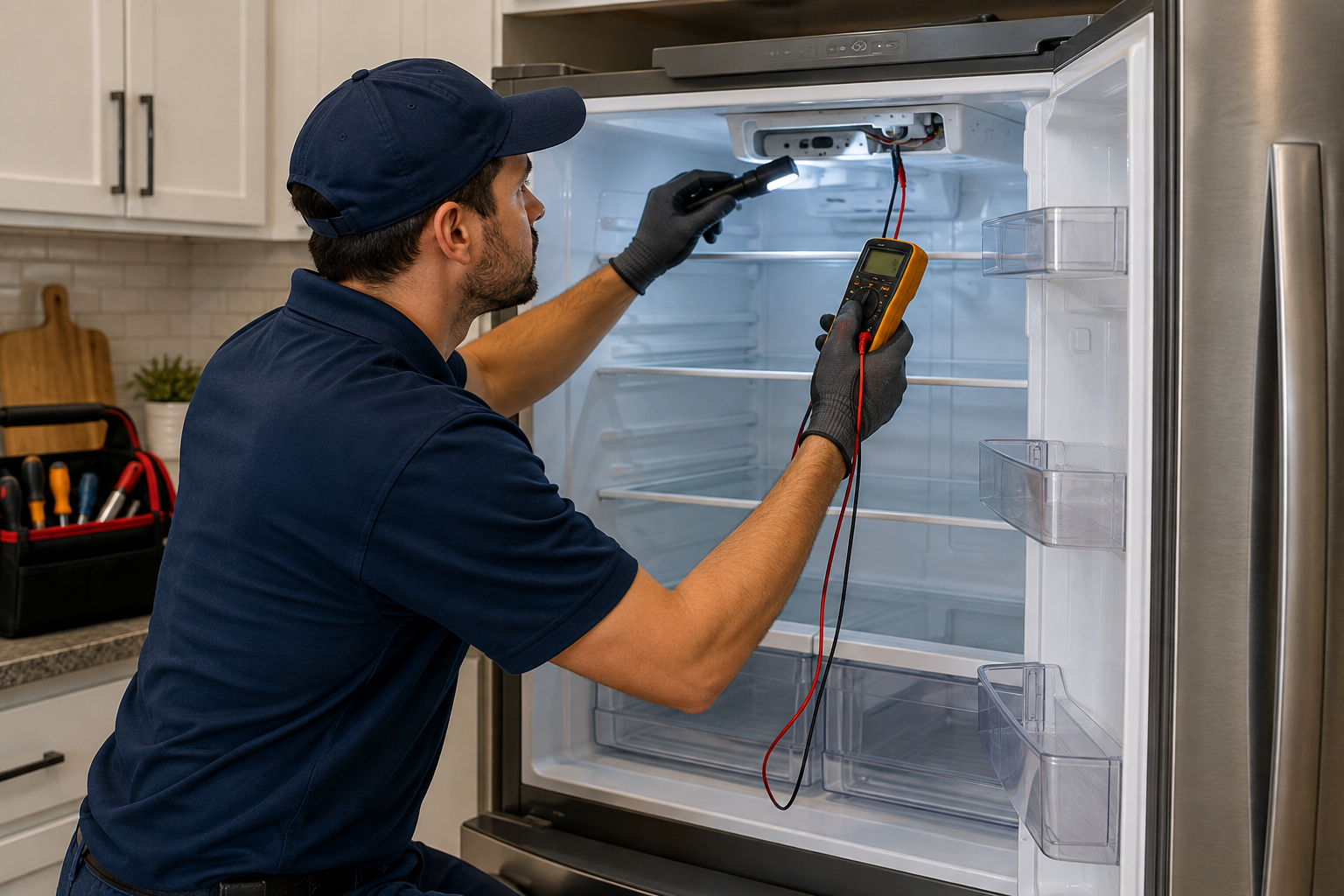
If your refrigerator light stays on when the door is closed, it can be more than an annoyance. A light that remains energized may add heat inside the fresh-food compartment and may occur with a door-open alarm, condensation, or a display that never sleeps. The light itself is not always the failed part. Door alignment, a switch, a magnetic sensor, wiring, or control logic may be responsible.
What a Technician Checks When a Refrigerator Light Stays On
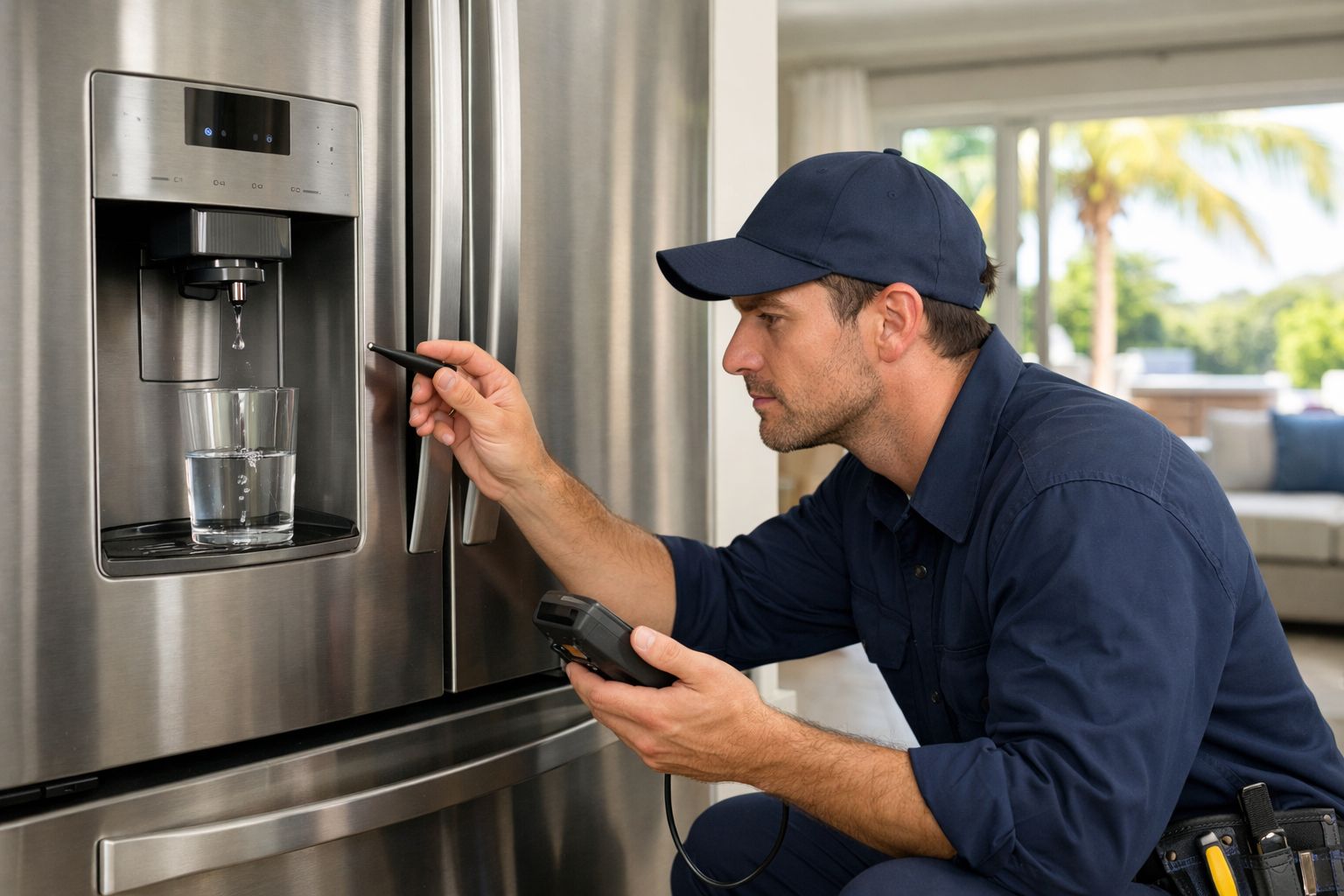
The first step is confirming the symptom. A technician distinguishes between an interior light that remains on, a display that stays illuminated, and a door-open alert that continues after closure. They also ask whether temperatures have changed, whether the light housing feels warm, and whether the refrigerator runs longer than usual.
Older refrigerators may use a visible push-button switch pressed by the door. Newer models often use concealed magnetic or reed-style sensors. That door-status signal may control lights, fans, alarms, and display behavior.
A technician checks that the door closes fully, inspects the hinges and gasket, and looks for shelves, drawers, or food packages preventing proper closure. Model-specific testing then confirms whether the switch or sensor is reporting a closed door correctly. Replacing an LED module before checking the signal, wiring, and control command can lead to an unnecessary repair.
A Door That Looks Closed May Not Be Sealing Properly
A physical obstruction is a common cause of a refrigerator reporting an open door. A large package, misaligned shelf, overfilled door bin, or drawer that is not fully pushed in can leave a small gap. That gap may be hard to see but still keep a mechanical switch released or prevent a magnetic sensor from recognizing the door position.
Inspect the door opening for anything out of place. Make sure shelves and drawers are seated correctly, and check that items in the door bins are not contacting the cabinet. Examine the gasket for crumbs, sticky residue, tears, or sections that are folded away from the cabinet.
Wipe visible debris with a soft cloth, but do not stretch or force the gasket. Door alignment also matters. A slightly sagging door can appear shut while its magnetic contact point no longer lines up properly with the cabinet sensor.
Why Some Refrigerators Have No Visible Light Switch
Many homeowners look for a small button near the door frame and assume a part is missing when they cannot find one. Not every refrigerator has a visible door-light switch. Concealed magnetic sensing is common on newer, built-in, and certain French-door models.
The sensor and magnet may be hidden behind trim, within the door, or inside the cabinet liner. In some cases, an incorrect magnet position can cause the lights and display to remain active after the door closes. That does not mean every refrigerator with this symptom has a reversed or failed magnet, but it shows why diagnosis should not begin with replacing a part based on appearance.
Do not pry off trim, tape over a sensor, bypass a switch, or probe cabinet wiring. Concealed electronics, sharp edges, and model-specific components make those shortcuts unsafe and unreliable. A proper diagnosis identifies whether the door signal, wiring, LED assembly, or control is at fault.
When a Staying-On Light May Affect Cooling
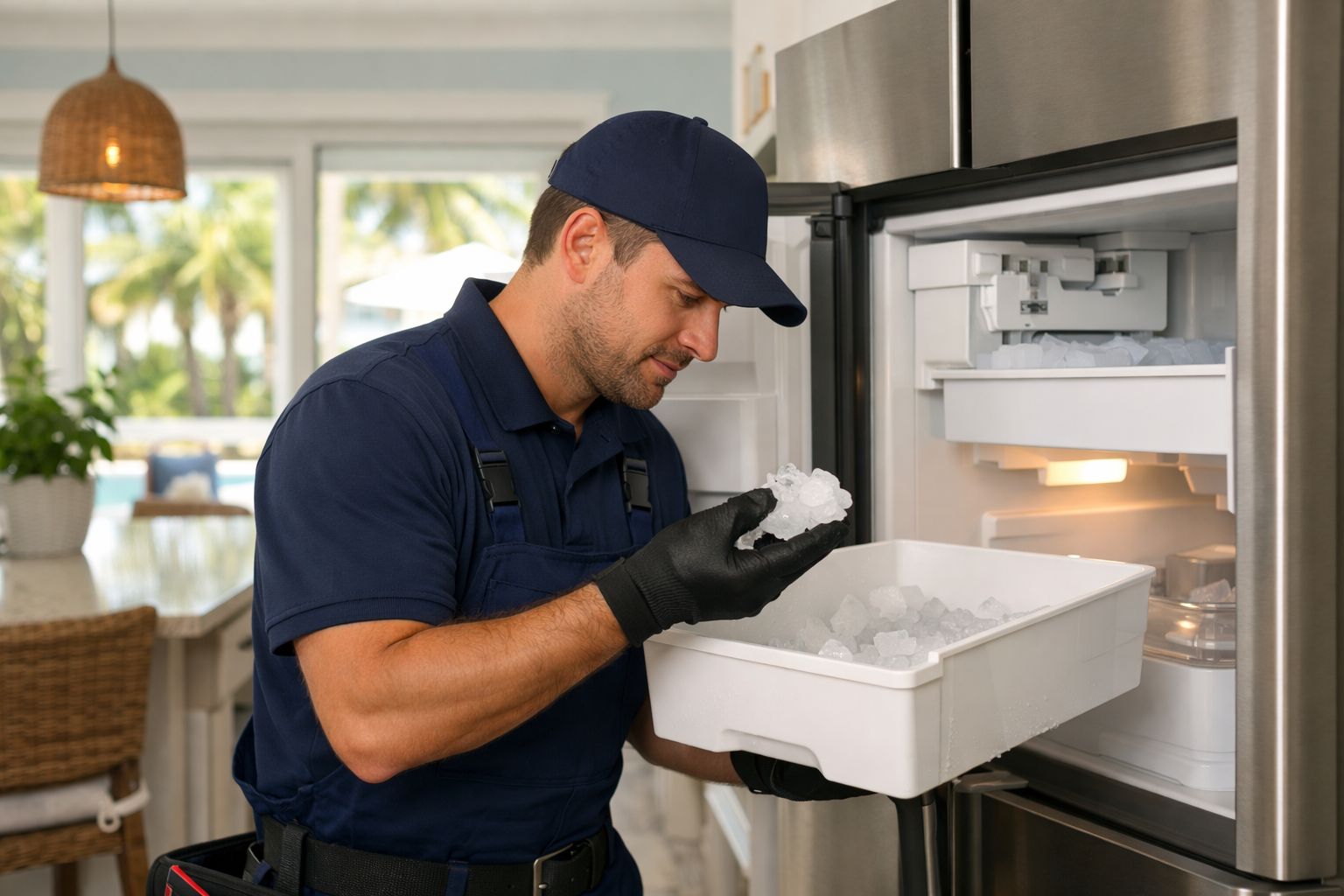
An incandescent bulb left on for hours can add noticeable heat to a small refrigerator compartment. LEDs create less heat, but a faulty LED module or housing can still become unusually warm. Repeated light operation may contribute to temperature instability, condensation, or longer compressor run time.
A warm refrigerator needs a complete diagnosis, however. The light may be contributing to the issue, or it may be happening alongside an airflow, defrost, fan, sensor, or cooling-system problem. This guide on a refrigerator running constantly explains why long run time alone does not identify a failed compressor.
Use an appliance thermometer to monitor the fresh-food section over several hours. Move perishables to safe cold storage if food is warming. If there is smoke, a burning odor, a melted lens, discoloration, repeated breaker trips, or extreme heat around the light housing, stop using the refrigerator and seek prompt service.
For refrigerator repair in Boynton Beach , General Appliance Service can determine whether the problem involves closure, a door sensor, wiring, an LED module, or controls. Homeowners needing appliance repair in Boca Raton, FL should treat warming-food concerns as a temperature issue, not only a lighting complaint.
Frequently Asked Questions About a Refrigerator Light Staying On
Can a refrigerator light staying on make food warm?
Yes, especially with an incandescent bulb operating for hours. Still, check the actual temperature because airflow, defrost, fan, or cooling problems may also warm food.
How can I tell if the light stays on after closing?
Look for a door-open alert, active display, or warm light housing. A safely positioned phone-camera recording can help, but some models have a brief shutoff delay.
Why does my refrigerator say the door is open?
The door may not close flush, the gasket may be obstructed, or a switch or magnetic sensor may report the wrong position. Wiring or controls can also contribute.
Does every refrigerator have a visible door-light switch?
No. Many refrigerators use concealed magnetic sensors instead of push-button switches. Avoid removing trim or probing behind panels because sensor locations and wiring vary by model.
Should I unplug a refrigerator with a hot light housing?
Unplug it and arrange service if it is extremely hot, melting, smoking, smells burned, or trips a breaker. Protect perishables if compartment temperatures are rising.
A refrigerator light that stays on is often repairable, but the correct solution depends on confirming the door-status signal, checking closure, and determining whether cooling performance has been affected.