
Dishwasher Clean Light Flashing Won’t Start: What the Signal May Mean
By General Appliance Service
A dishwasher Clean light flashing while the unit will not start is frustrating because it appears to have power but will not begin washing. On many models, the light signals that the control detected something unexpected during a previous or current cycle. It is a clue, not proof that one specific part has failed.
The meaning varies by manufacturer and model. Note what happens after pressing Start: does the dishwasher drain, fill, hum, or remain silent? Those details matter.
What a Technician Checks When a Dishwasher Will Not Start
A technician begins with the full model number and exact indicator pattern. A flashing Clean light can mean different things across brands and even between model families, so model-specific diagnostic information matters.
The door latch is an early check. The display can have power while the dishwasher refuses to run because it does not confirm that the door is fully closed. A worn latch, misaligned strike, damaged switch, loose connection, or wiring problem may cause that result.
Diagnosis then follows the cycle sequence: incoming power, latch status, water fill, circulation, heating operation, temperature sensing, wiring, and control outputs. A suspected heater, pump, or control board may not actually be receiving power because another component or connection failed first.
Safe Checks Before You Try Starting It Again
Make sure the door closes normally. Remove dishes, utensils, or racks that may prevent a complete seal, and inspect the latch area for debris or obvious damage. Push both racks fully into place before trying again.
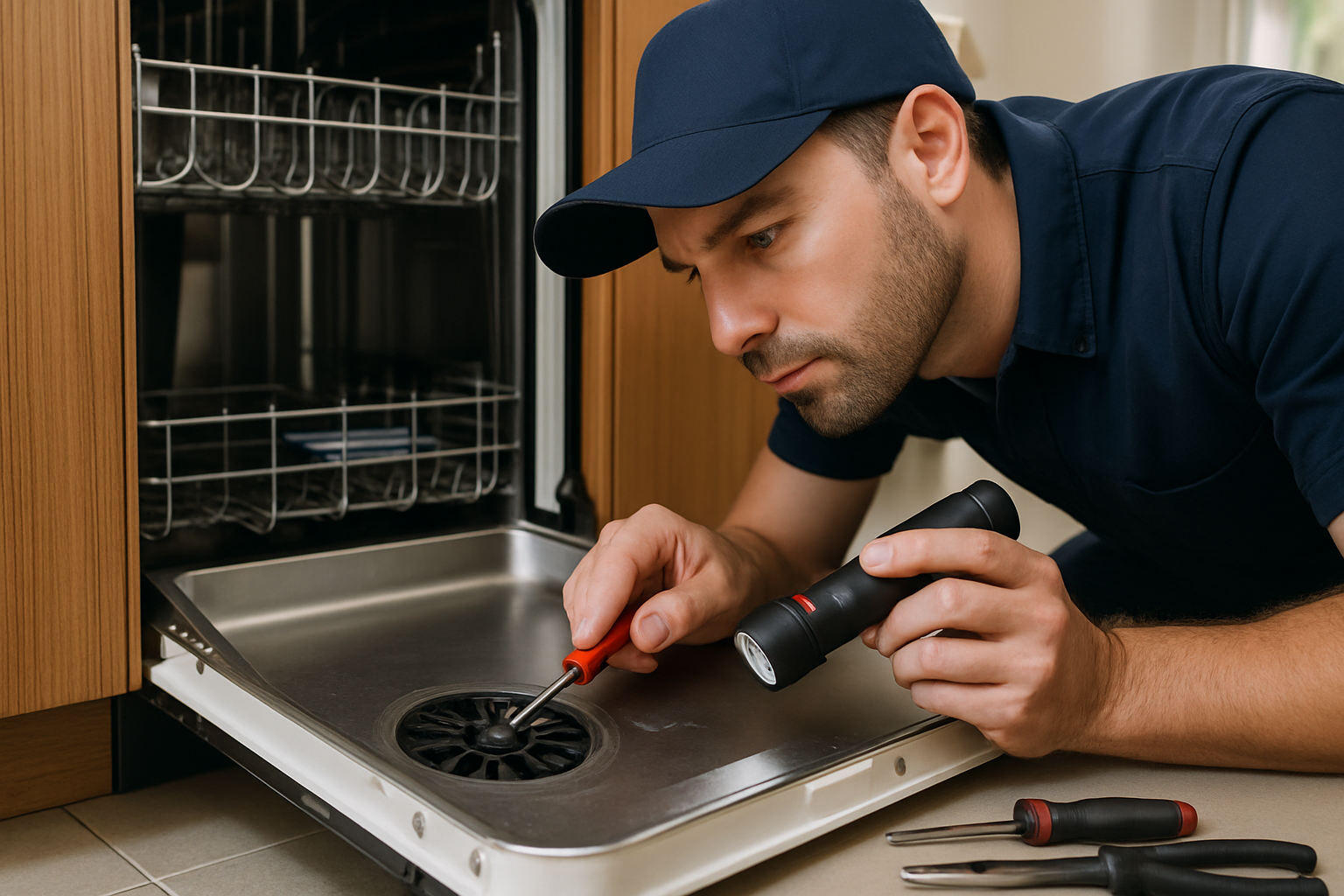
Check the filter and spray arms if they are accessible without disassembly. Debris does not automatically cause a flashing Clean light, but it can contribute to poor circulation and washing results. Under the sink, confirm that the dishwasher water supply valve appears open. Do not disconnect plumbing or remove electrical panels.
If the owner’s manual permits a power reset, turn off the dishwasher breaker for several minutes, then restore power. A reset may clear a temporary control condition but will not repair an underlying failure. If the light returns, record the behavior rather than repeatedly resetting it.
Photograph the lights, locate the model number, and note whether the unit drains, fills, hums, or stays quiet. Homeowners needing dishwasher repair in Boynton Beach can provide those details before service.
Why the Dishwasher May Drain First and Then Stop
A brief drain at the beginning of a cycle is often normal. Many dishwashers pump out leftover water before filling for the next wash cycle. Hearing the drain pump does not confirm that every later stage is working.
If it drains and then stops, the failure may occur during the next step. The dishwasher may not detect a closed door, may not fill correctly, or may be unable to begin circulation after filling. On some models, the control stops the sequence after recognizing a stored fault.
An incomplete wash symptom is not always the same problem as a flashing indicator. For example, a dishwasher detergent pod not dissolving can suggest weak circulation or a dispenser issue, but it does not automatically explain a no-start condition.
When a Flashing Light Needs Professional Diagnosis
Stop trying to restart the dishwasher if there is smoke, a burning smell, repeated breaker trips, visible melted wiring, or a leak that could overflow. Rising standing water or water reaching the floor also deserves prompt attention.
For other no-start cases, diagnosis should test the actual failure path instead of assuming the light means a bad control board or heating element. Service may include checking the latch circuit, fill and circulation sequence, heater and thermistor readings, wiring terminals, pumps, and control outputs.
This approach is useful for intermittent problems. A loose connector can work during one cycle and fail during the next. A control board may cause the symptom, but incorrect information from a sensor or switch can produce the same result. For appliance repair in Delray Beach, documenting the light pattern and cycle behavior helps narrow the diagnosis.
Frequently Asked Questions About a Dishwasher Clean Light Flashing Won’t Start
Why is my dishwasher Clean light flashing but it will not start?
The control may be reporting a stored fault or a condition blocking startup. Possible causes include the latch, fill system, circulation, heating circuit, sensor, wiring, or control.
Can I reset a dishwasher when the Clean light is blinking?
Use only a reset procedure allowed by the owner’s manual. A breaker reset may help temporarily, but it will not correct the original failure if the light returns.
Does a flashing Clean light always mean the heating element is bad?
No. Heating issues may be involved on some models, but the same light can relate to sensing, wiring, circulation, filling, or control operation.
Why does my dishwasher drain first and then stop?
Initial draining is often normal. If it stops afterward, the problem may occur during latch verification, filling, circulation, or another next-stage control check.
When should I stop trying to restart a dishwasher with a flashing light?
Stop immediately for smoke, burning odors, breaker trips, melted wiring, major leaks, or overflow risk. Otherwise, make one manual-approved reset attempt and seek diagnosis if it returns.
A flashing Clean light is best treated as a clue rather than a verdict. Record the model number and exact behavior, perform only safe checks, and arrange testing if the cycle will not progress.