
Why Is My Dishwasher Detergent Pod Not Dissolving After a Cycle?
By General Appliance Service
Finding a dishwasher detergent pod still sitting in the dispenser after a completed cycle is frustrating, especially when dishes are dirty or dry. A dishwasher detergent pod not dissolving is a clue, not a diagnosis. It may mean the pod was not released into the tub, or that too little moving water reached it. The condition of the pod and dishes helps narrow the cause.
What a Technician Checks When a Dishwasher Pod Stays Intact
The first question is whether the dispenser door opened. A tall baking sheet, cutting board, pan, or utensil handle can block its path. The dishwasher may otherwise complete the cycle normally, but the door cannot open far enough to release the pod.
If the dispenser is open and the pod remains mostly whole, attention shifts to wash action. Pods need steady water spray to dissolve and distribute detergent. A dishwasher can fill and drain normally while circulating water poorly through the spray arms.
Dishes that are wet but still dirty can suggest weak spray, restricted spray-arm holes, or poor water distribution. Dishes that remain mostly dry may indicate that little wash water reached the racks. A completely dry pod in a closed dispenser points to a different issue than a partially melted pod in the tub.
Check the Dispenser Door and Rack Loading
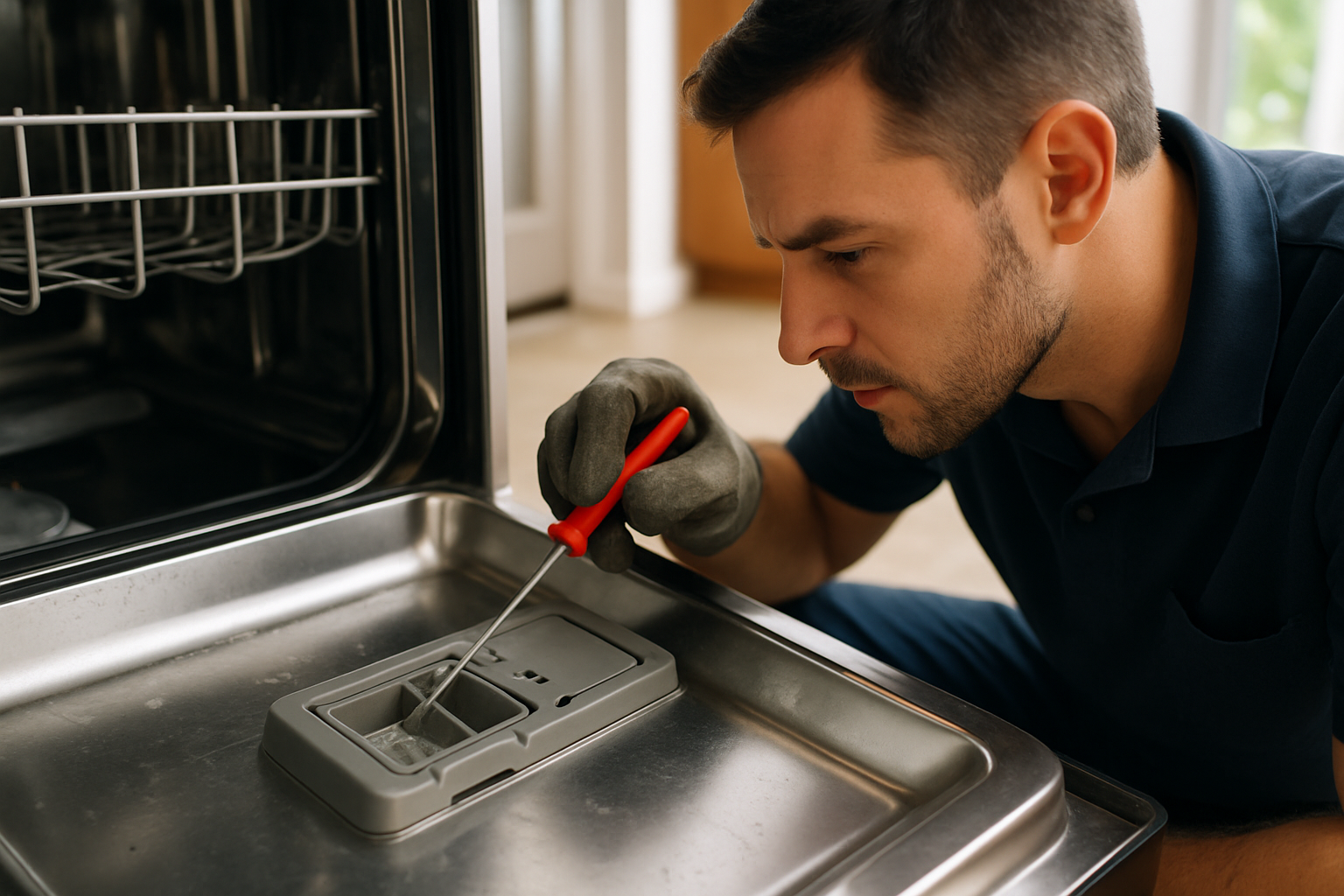
With the dishwasher off and cool, inspect the detergent dispenser. Confirm that the cup closes and latches without force. A damaged pod, residue in the cup, or moisture inside the dispenser can prevent the pod from dropping properly.
Load the racks as usual, then close the dishwasher door slowly. Look for items directly in front of the dispenser. Large platters, pan handles, tall utensils, and improperly positioned rack items can interfere with the dispenser door.
Use the detergent placement recommended in the owner’s manual. Pods generally belong in a dry dispenser cup rather than loose in the bottom of the tub. Tossing a pod into the tub may seem like a simple workaround, but it can dissolve too early and leave the main wash portion without enough detergent.
Evaluate Water Flow and Temperature
The drain pump and wash motor have different jobs. A dishwasher can remove water successfully while the circulation system is weak, restricted, or not operating. Normal drain sounds do not prove that the spray arms received enough water pressure.
After a normal cycle, note whether the spray arms have changed position. They do not spin continuously like lawn sprinklers, but they should move in response to water pressure. If both arms repeatedly stop in the same place, cups stay dry inside, and dishes remain dirty, weak wash action is more likely.
Clean the user-accessible filter and inspect spray-arm holes if the manufacturer permits it. Reinstall all components correctly, since a missing or poorly seated filter can create sump-area problems. Cold incoming water can also slow detergent dissolution. Running the kitchen faucet until hot water arrives before starting may help, unless the owner’s manual advises otherwise.
If the pod remains intact along with poor cleaning or nonmoving spray arms, dishwasher repair in Boynton Beach can identify circulation, restriction, diverter, or control-related concerns.
Why Professional Diagnosis Matters
An undissolved pod does not automatically mean the heating element, dispenser, pump, or control board has failed. Heating performance can affect cleaning and drying, but heat must be distributed by adequate water circulation. Sensors, wiring connections, wash-motor operation, and control outputs can also affect the cycle.
A technician checks the sequence of operation rather than guessing at a replacement part. This may include confirming fill level, listening for wash-motor operation, inspecting the filter and sump, checking dispenser-latch operation, and verifying water delivery through the spray system.
Homeowners needing appliance repair in Coral Springs should avoid removing access panels for electrical testing or reaching into the sump during operation. Stop using the dishwasher if it leaks, smells like it is burning, produces smoke, or trips a breaker.
Frequently Asked Questions About a Dishwasher Detergent Pod Not Dissolving
Why is my dishwasher pod still whole after the cycle?
The dispenser may have been blocked, the pod may have stuck in a damp cup, or insufficient water circulation may have reached it.
Can my dishwasher fill and drain but still clean poorly?
Yes. Filling and draining do not confirm proper wash-pump circulation. Weak spray, clogged spray arms, or diverter issues can leave dishes dirty.
Can a pan block the detergent dispenser door?
Yes. Large pans, cutting boards, utensil handles, and tall items can prevent the dispenser door from opening fully during the wash cycle.
Does an undissolved pod always mean the heater is bad?
No. Cold water can slow dissolution, but a blocked dispenser or poor circulation is often the more immediate cause of an intact pod.
When should I schedule dishwasher repair?
Schedule service if the dispenser is clear, the filter is clean, and the issue continues, especially with dry dishes, unusual sounds, error codes, leaks, or nonmoving spray arms.
A repeated pod problem usually requires more than changing detergent. Checking dispenser clearance, water flow, and temperature in the proper order helps avoid unnecessary parts and restores effective cleaning.