
Why Is My Gas Burner Only Lighting on One Side?
By General Appliance Service
A gas burner lights on only one side when the flame is not traveling evenly through the burner head. You may see a normal spark and flame near the igniter while the rest of the ring stays dark, sputters, pops, or takes several seconds to light. The issue often follows a boil-over, cleaning, or reinstalling burner parts, but several conditions can create the same symptom.
What a Technician Checks When a Gas Burner Only Lights on One Side
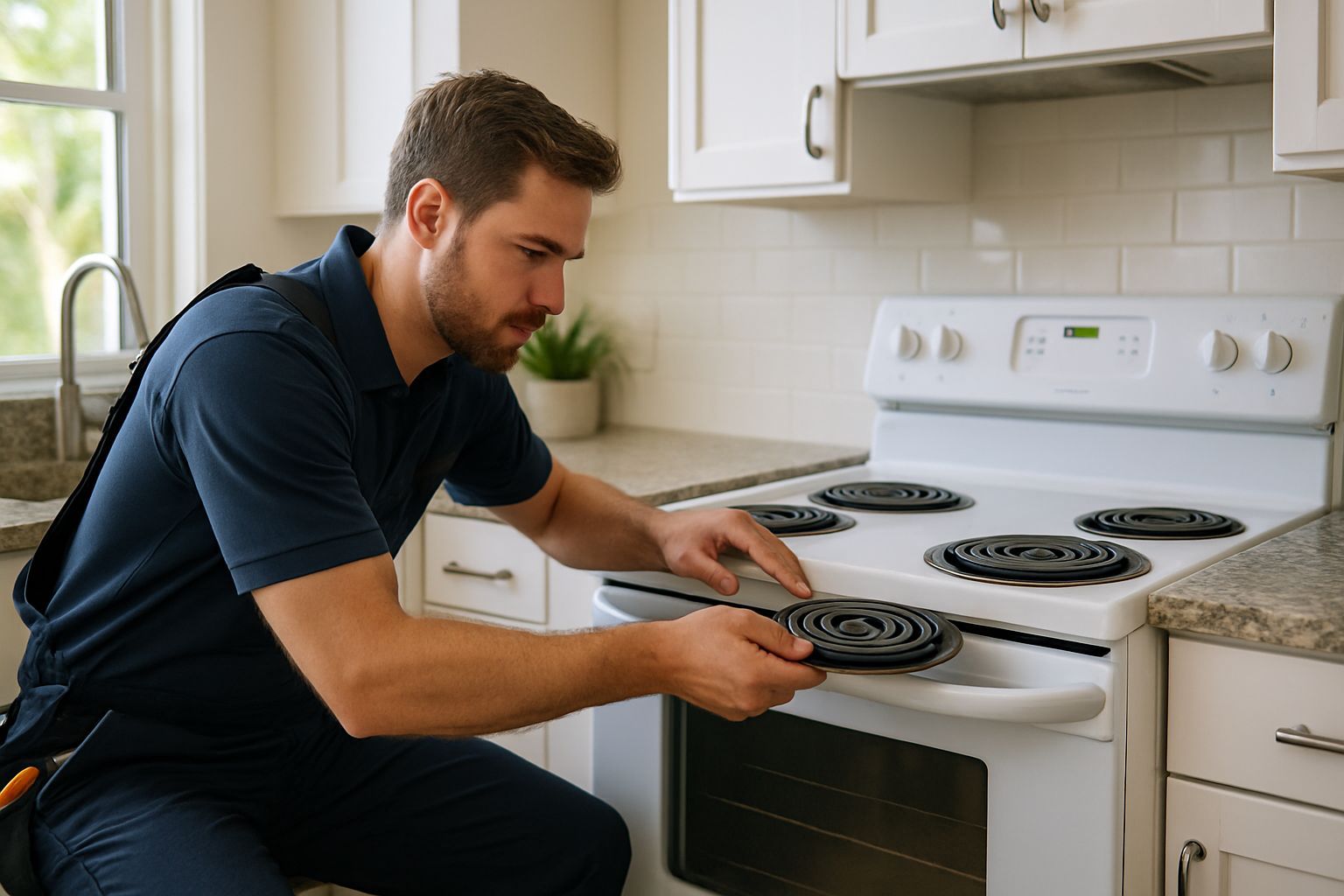
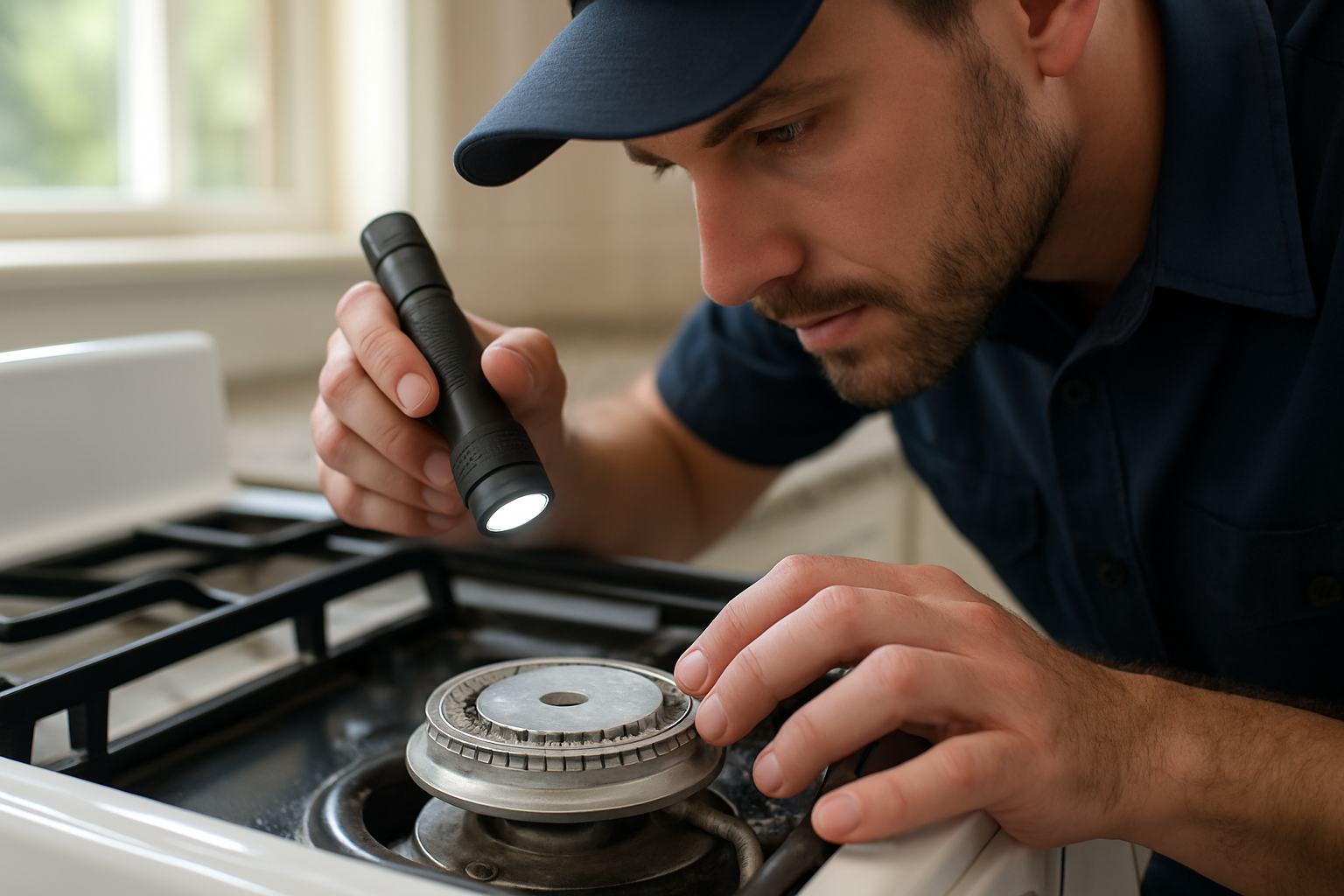
A technician first checks whether the burner cap and burner head are seated correctly. On many cooktops, the cap must sit in a specific position over the burner head. If it is tilted, installed on the wrong burner, or not engaged with alignment tabs, gas may ignite near the electrode but fail to travel around the ring.
A normal spark does not confirm that the burner is working properly. The electrode ignites gas at one location; burner passages then carry the flame around the head. A restriction, damaged passage, poor cap fit, or gas-delivery concern can interrupt that process.
The technician also evaluates the complete flame pattern at different settings. They inspect accessible surfaces for corrosion, cracks, heat damage, residue, and warped components. This helps distinguish a simple reassembly issue from a burner-base, ignition, or gas-supply concern.
Start With Burner Cap Alignment and Moisture
If the problem appeared after cleaning, begin with the removable burner parts. Turn the control off, let the cooktop cool completely, and consult the owner’s manual for the proper cap and burner-head orientation. Parts that appear interchangeable may not be, particularly when the cooktop has burners of different sizes.
The cap should sit flat without rocking, and the burner head should be fully seated on its base. Moisture trapped beneath either component after washing or a spill can interfere with ignition and flame travel. Allow the parts to dry completely before reassembling them according to the manufacturer’s instructions.
Look for visible food residue, grease, dried liquid, discoloration, cracks, or warping. Use only cleaning methods approved for the appliance. Do not force a pin, paper clip, toothpick, or other object into flame openings. Probing or enlarging ports can damage the burner and change its intended gas flow and flame pattern.
Why a Partially Lit Burner Is Not Always a Clogged Port
A restricted burner passage can leave one area of the ring without flame, especially after a spill. However, a clog is not the only possible cause. Burner alignment, corrosion, damage, combustion behavior, and gas delivery can all affect the final flame pattern.
A burner head that has been reinstalled slightly out of position may look normal from above while still preventing even flame travel. Corrosion or damage in passages may also be difficult to see. In some cases, an issue at the burner base prevents gas from reaching the head correctly.
If the flame is weak around the entire ring, lifts away from the burner, appears heavily yellow or orange, produces soot, or changes when other burners are used, the problem may extend beyond one opening. Homeowners should not remove an orifice, adjust an air shutter, apply sealants, or alter gas components. Persistent uneven flames should be evaluated through oven and cooktop repair rather than guessed at through part replacement.
Flame Clues and When to Stop Using the Burner
A flame that starts at the igniter but will not move around the ring points to a flame-travel or gas-distribution issue. Delayed ignition followed by a sudden “whoosh” can mean gas is accumulating before lighting. Stop using that burner rather than continuing to test it.
Popping, sputtering, or an unstable flame may result from moisture, residue, a misplaced component, or a more involved gas-flow concern. Continued clicking after ignition is a separate symptom, although it can occur with uneven flame. See why a gas stove keeps clicking after the burner lights for common clicking causes.
Turn the burner off immediately for a gas odor, repeated flare-ups, flames below the cap, soot, heavy yellow flame, or delayed ignition. If you smell gas, leave the area and follow the gas utility’s emergency instructions.
Frequently Asked Questions About a Gas Burner Only Lighting on One Side
Why does my gas burner light on only one side?
The cap or burner head may be misaligned, moisture may be present, or a passage may be restricted or damaged. Gas delivery can also be involved.
Can a misplaced burner cap cause an uneven flame?
Yes. A cap that does not sit flat can disrupt flame travel around the ring. Confirm that each part is installed on the correct burner.
Why did the problem start after I cleaned the cooktop?
Cleaning can leave moisture beneath removable parts or shift them out of alignment. Let components dry completely and reinstall them according to the owner’s manual.
Is it safe to use a partially lit burner?
Avoid using it until the cause is known. Stop immediately for gas odor, popping, flare-ups, soot, delayed ignition, or flames below the cap.
Should I clean burner ports with a pin or paper clip?
No. Do not probe or enlarge burner ports. Use manufacturer-approved cleaning methods and have persistent restrictions or damaged components professionally diagnosed.
For dependable diagnosis, homeowners needing appliance repair in Lake Worth Beach, FL can schedule service before an uneven flame becomes a larger ignition or combustion concern.