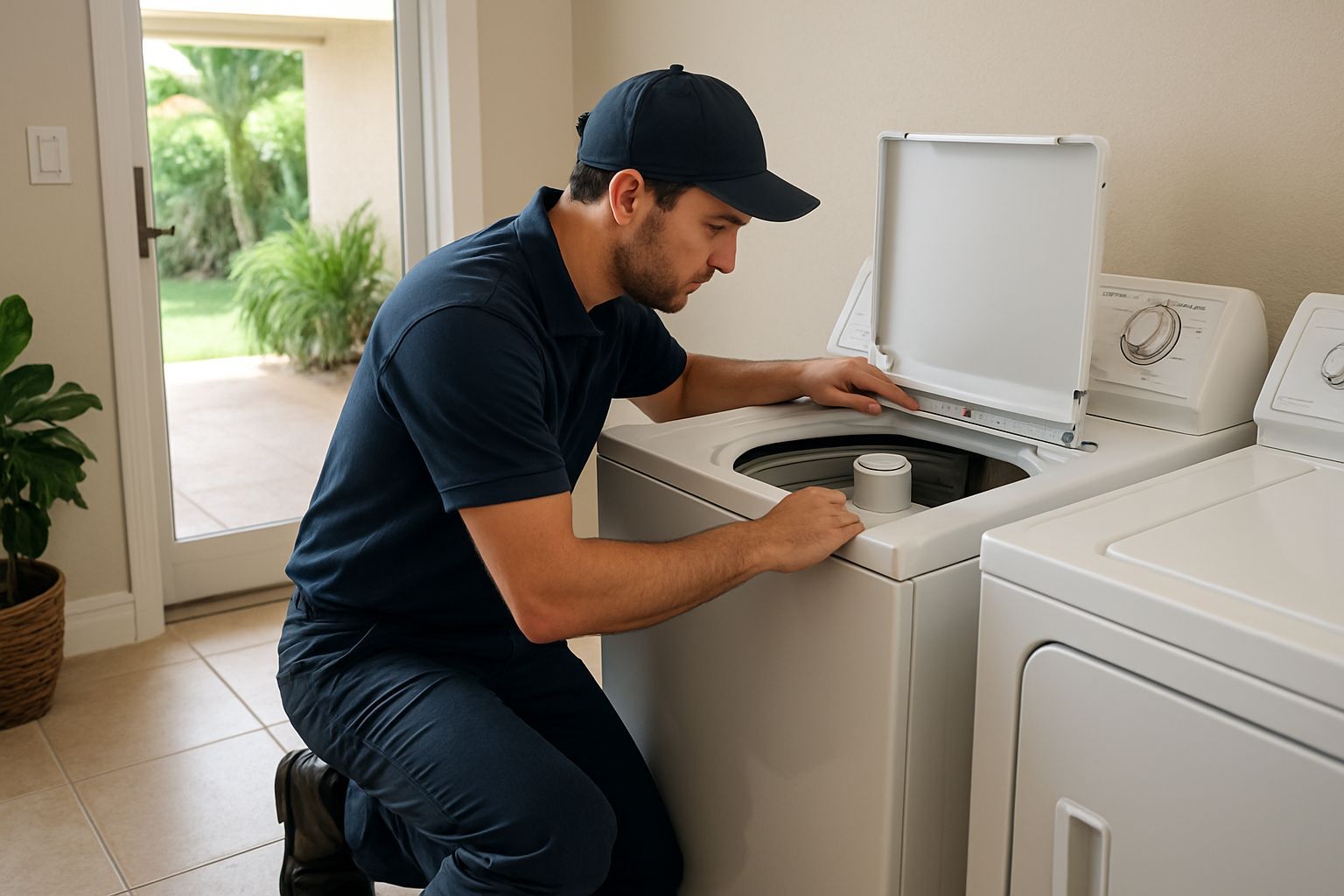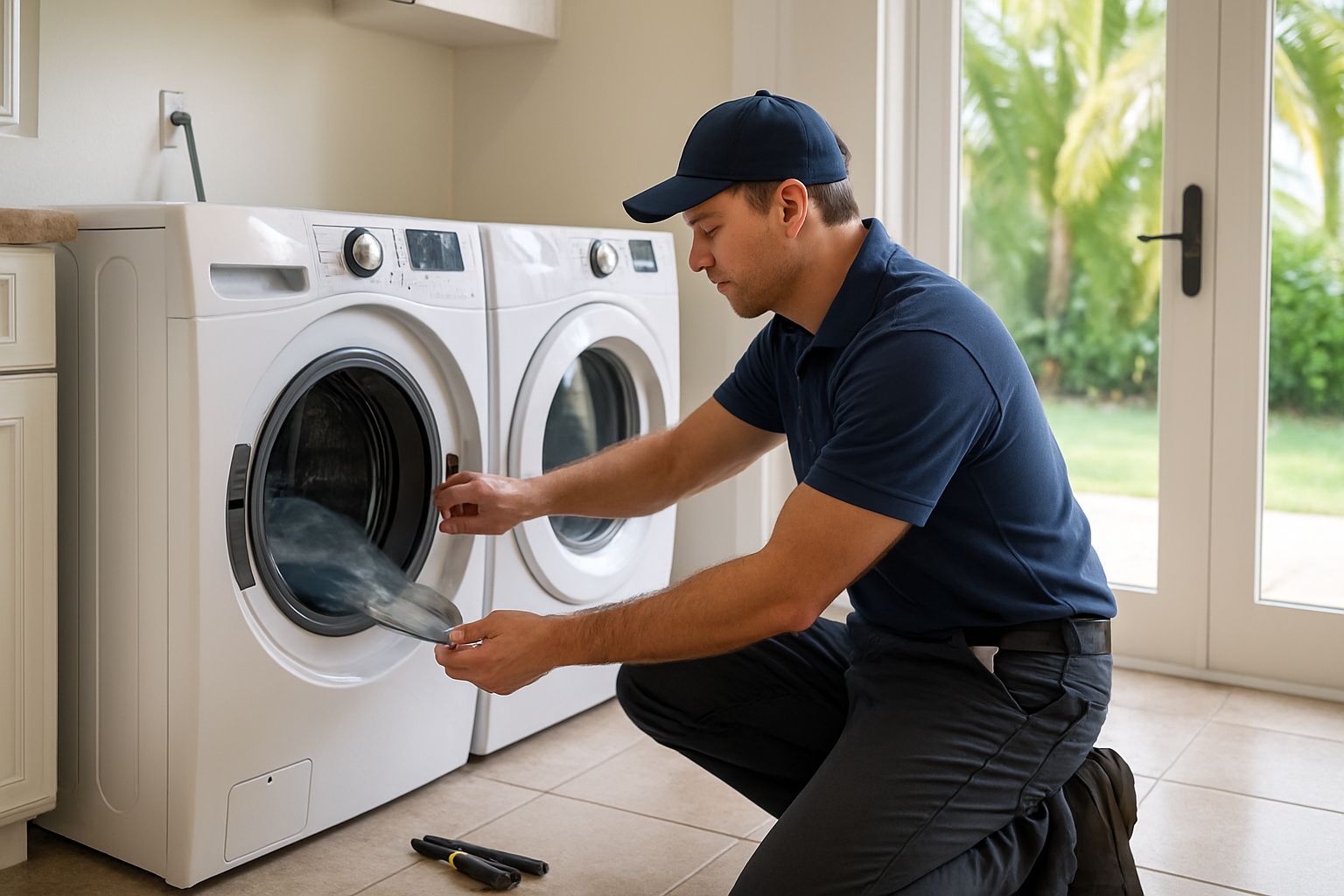

Washer Fabric Softener Dispenser Not Emptying? What the Symptom Can Mean
By General Appliance Service
A washer fabric softener dispenser not emptying does not always mean the drawer has failed. The important detail is what happened during the cycle: did softener remain in the cup, release during washing instead of rinsing, or disappear while water stayed behind? These similar-looking symptoms can point to different dispenser, water-flow, or timing issues.
What a Technician Checks When a Washer Dispenser Will Not Empty
Most washers route water through specific dispenser channels at scheduled points in the cycle. Depending on the design, the softener compartment may use a removable insert, siphon-style piece, or small passages that flush product only after enough rinse water enters the cup.
A technician first confirms the exact symptom and the expected dispenser sequence for that model. Dried softener residue can block a cup or interfere with siphon action, but restricted passages in the housing, weak water delivery, or a valve that does not open correctly can create similar results.
A cup that never flushes is diagnosed differently from one that flushes at the beginning of the cycle. Likewise, a small amount of standing water may be normal on some models, while a substantially full compartment can indicate a drainage, insert, or routing issue.
Softener Left Behind, Early Dispensing, and Standing Water
Softener left in the compartment after a completed cycle often means water did not move through that channel with enough force. Thick residue around the insert can restrict the flow path, and a partial blockage farther back in the dispenser housing can cause the same symptom even when the cup appears clean.
Softener that releases early is a timing clue. Water may be entering the softener path during the wrong stage, or it may be favoring one route when it should be directed elsewhere. Depending on the washer, inlet-valve operation, water-routing passages, wiring, and control commands may all affect when the dispenser flushes.
A drawer containing mostly clear water is another pattern. The softener may have dispensed, but water may not be draining or siphoning from the cup as intended. Check the drawer seating, removable insert, and siphon components before assuming an electronic failure.
Safe Checks Before Calling for Washer Service
Start with the owner’s manual. Confirm that softener is in the correct compartment and below the maximum-fill line. On multi-section drawers, it is easy to confuse the prewash, detergent, bleach, and fabric softener areas.
Use only the approved product type and amount. Overfilling or using overly concentrated softener can leave sticky residue that slows dispensing. If the manufacturer permits dilution, follow its instructions rather than guessing at a mixture.
With the washer turned off, remove only parts identified as removable in the manual. Clean visible residue using the manufacturer-approved method. Do not use wire, pins, drills, or abrasive tools in small openings; they can damage a siphon piece, enlarge a port, or push debris deeper into the dispenser.
Also verify that household water valves are fully open and inlet hoses are not kinked or crushed. Run a normal load and note whether the softener remains, releases early, or leaves standing water.
Why Water Supply and Cycle Timing Matter
A washer can fill, wash, drain, and spin normally while one dispenser route receives inadequate water. After checking the cup and housing, a technician may test inlet-water flow and the applicable valve solenoids during the correct cycle stage.
A valve may be the cause, but restricted cold-water flow, damaged wiring, or incorrect control timing can produce the same complaint. A quick fill test does not prove water is reaching the fabric softener channel during rinse.
For persistent problems, washer and dryer repair can identify the failure area. GE owners can also seek GE appliance repair in Palm Beach Gardens, FL. Stop using the washer if the drawer overflows, leaks, smells hot, or trips a breaker. For local service, consider appliance repair in West Palm Beach, FL.
Frequently Asked Questions About a Washer Fabric Softener Dispenser Not Emptying
Why is fabric softener still sitting in my washer dispenser?
Product buildup, an incorrectly installed insert, or insufficient water flow may prevent flushing. Restricted passages or a valve-related issue can also stop rinse-stage dispensing.
Why is there water left in the fabric softener drawer?
A small amount can be normal on some models. A substantially full cup may mean water entered but did not drain or siphon correctly.
Can too much fabric softener keep the dispenser from emptying?
Yes. Excess product can thicken and dry in the cup or siphon area, reducing flow. Stay below the maximum line and use the recommended amount.
Why did my washer release softener at the beginning?
Early release suggests water entered the softener path at the wrong time. Causes may include drawer components, routing passages, valve performance, wiring, or controls.
Should I replace the dispenser drawer if it will not rinse out?
Not before checking the water path and cycle operation. A replacement drawer will not correct a weak valve, restricted housing passage, or timing problem.