
Why Is There Clean Water in My Dishwasher After the Cycle?
By General Appliance Service
A dishwasher that is empty at the end of a cycle but has water in it by morning has a different issue from one that never drains. Clean water in dishwasher after cycle may enter through the fresh-water supply or return through the drain hose. The water’s appearance, timing, and odor offer useful clues, but diagnosis is needed before identifying a failed part.
What a Technician Checks When a Dishwasher Refills Later
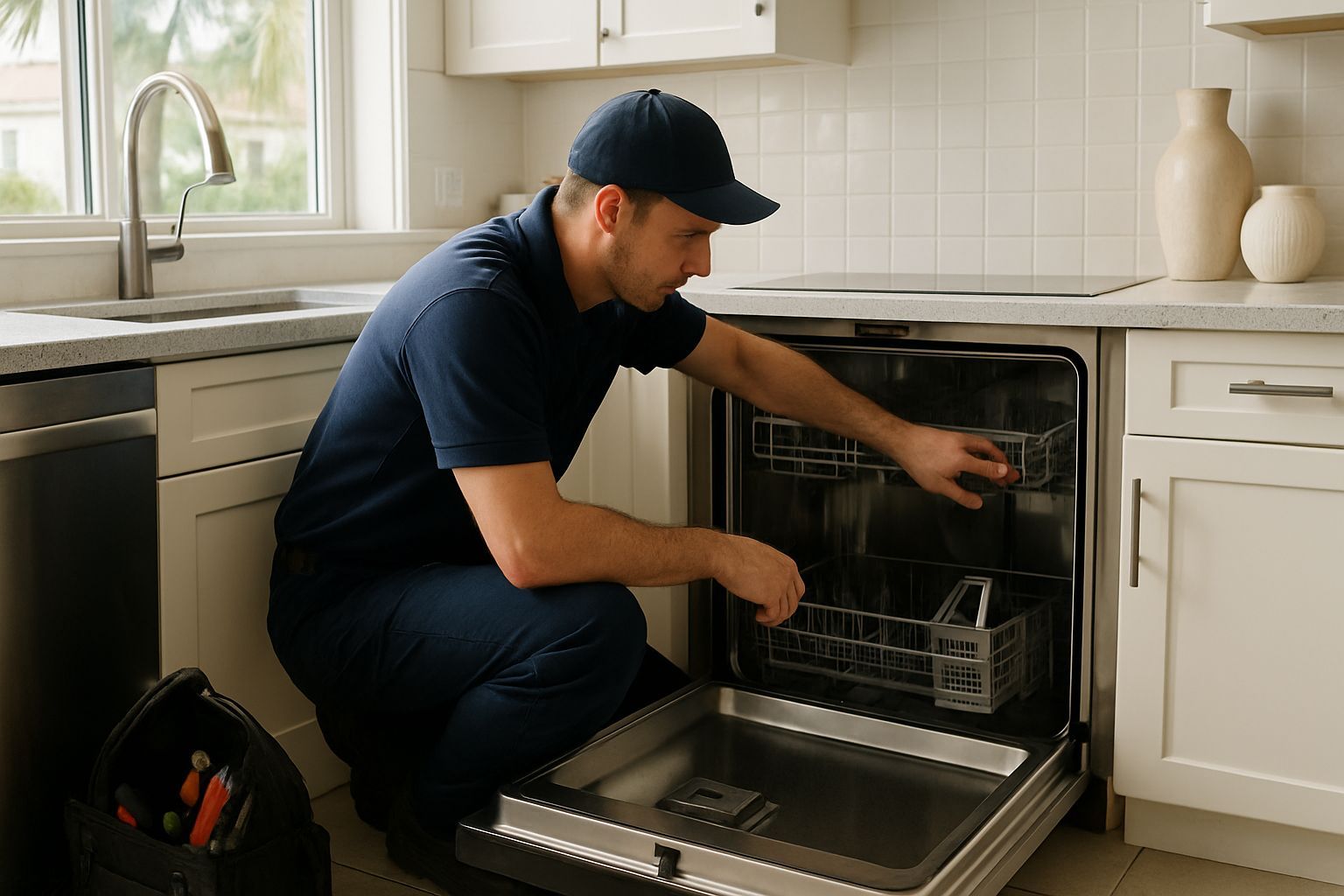
A technician first confirms whether the tub was truly empty when the cycle ended. Moisture around the sump screen can be normal, but standing water that appears after several hours of non-use suggests either a slow refill or drain-side backflow.
If the dishwasher completes its drain portion normally, attention turns to the two possible water paths: the inlet valve and the drain connection. Clear, odor-free water that returns while the appliance sits unused can indicate an inlet valve that is not sealing completely.
The valve should close whenever it is not energized. A worn seal or debris inside the valve can allow a slow seep over several hours. However, drain backflow can also look relatively clean, particularly after recent sink or disposal use. The plumbing path should be ruled out before replacing parts.
Fresh Water and Drain Backflow Leave Different Clues
Water from a slowly leaking inlet valve is often clear and has little or no odor. It may appear even when nobody has used the sink, disposal, or nearby plumbing since the dishwasher completed its cycle.
Drain-related water is more likely to be cloudy, smell like the sink drain, or contain food particles and dark residue. It may show up after running the disposal, draining a full sink, or noticing slow kitchen drainage. Dishwasher drain hoses commonly connect to the disposal or sink drain plumbing.
A drain hose should rise high beneath the countertop before dropping to its drain connection. This high loop helps prevent wastewater from moving back toward the dishwasher. A low, kinked, crushed, or poorly routed hose can contribute to drainage and backflow problems, although routing alone does not explain every overnight refill.
When requesting dishwasher repair, explain whether the tub was empty at cycle end and describe the water found later.
Safe Things to Observe Before Calling for Service
After the next completed cycle, open the door and look at the tub bottom. Note whether it appears drained, then leave the dishwasher unused for several hours. Do not add water or run repeated test cycles.
If water returns, observe it without disconnecting hoses or plumbing. Is it clear? Does it have an odor? Are food bits or residue present? Also note whether the sink, disposal, or kitchen drain was used during that period.
Under the sink, look for an obviously low, pinched, or crushed drain hose. Do not disconnect the hose, alter plumbing, or remove the water supply line. Make note of slow sink drainage, backups, or disposal issues.
Stop using the dishwasher and arrange prompt service if water reaches the floor, the water level keeps increasing, an error code returns, or there is a burning or electrical odor.
Why the Inlet Valve Is Not the Only Suspect
An inlet valve leak is mechanical: water pressure remains available at the valve, and a compromised seal may allow water through while the dishwasher is off. A technician can inspect the fill path and valve operation rather than assuming the control board is commanding a fill.
Control, float, pressure-sensor, and level-sensing issues can cause incorrect filling behavior, but those checks usually follow verification of drainage, hose routing, backflow conditions, and the inlet valve. Diagnosis may also include the sump, check valve, drain path, wiring, stored faults, and control outputs.
Replacing a valve without confirming the source can leave the original problem unresolved. Homeowners seeking appliance repair in Delray Beach, FL should mention sink-drain symptoms and the dishwasher’s refill pattern.
When an Overnight Refill Needs Prompt Attention
A small amount of water should not be ignored. An inlet leak can worsen into an overfill or floor-leak risk, while drain backflow can expose the dishwasher to dirty wastewater and recurring odors.
Take a photo when you first find the water and note how long the dishwasher had been idle. Those details give the technician a more useful starting point than simply reporting that water sometimes appears.
Frequently Asked Questions About Clean Water in Dishwasher After Cycle
Why is there clear water in my dishwasher after it finished?
If the tub was empty after the cycle and clear water returns later, a seeping inlet valve is possible. Drain-side backflow must also be considered.
Can an inlet valve leak when the dishwasher is off?
Yes. A valve with a worn or obstructed internal seal may not close completely, allowing water pressure to slowly add water to the tub.
How can I tell if water is coming from the drain?
Drain-related water may smell, look cloudy, or contain debris, especially after sink or disposal use. Clear water without sink activity may suggest an inlet issue.
Can a missing high loop cause water to return?
It can contribute to backflow. The drain hose should rise high beneath the sink before connecting to the disposal or drain plumbing.
Should I keep using a dishwasher that refills overnight?
Avoid using it if water is increasing, leaking onto the floor, or accompanied by drain backups. Prompt service can prevent water damage and sanitation concerns.
If the dishwasher repeatedly refills, leaks, or shows electrical symptoms, stop using it. Record the timing and water appearance, then arrange professional diagnosis before the issue becomes more extensive.