
Why Does My Dishwasher Smell Like Burning Plastic During a Cycle?
By General Appliance Service
A dishwasher that smells like burning plastic can have two very different causes: an item in the load has melted near a heat source, or an internal component is overheating. A warped container may be easy to spot, while a wiring, motor, or heater-circuit problem needs prompt attention. Treat a strong, recurring, or electrical-smelling odor as a stop-use symptom, especially if there is smoke or a breaker trip.
What a Technician Checks When a Dishwasher Smells Like Burning Plastic
A technician first determines whether the odor came from inside the tub or beneath the dishwasher. Lightweight lids, utensils, labels, and rack accessories can shift during a cycle and contact an exposed heating element. This usually leaves visible melting, residue, and a sharp plastic smell.
However, overheated wire insulation, loose heater terminals, moisture around connectors, or a failing motor connection can smell similar. Smoke, discoloration, sparking, or a tripped breaker makes an electrical cause more urgent.
The inspection includes the heater, wiring harnesses, control connections, and circulation and drain motor areas. A technician also checks for moisture intrusion and confirms that the dishwasher fills and circulates water correctly. The heater may be involved, but the underlying issue could be a connection, control, or circulation problem.
Shut the Dishwasher Off Before Looking for the Cause
Cancel the cycle and let the dishwasher cool completely. If you see smoke or sparking, notice a strong electrical odor, or find a tripped breaker, do not run another cycle. Turn off power at the appropriate breaker if it is safe to do so.
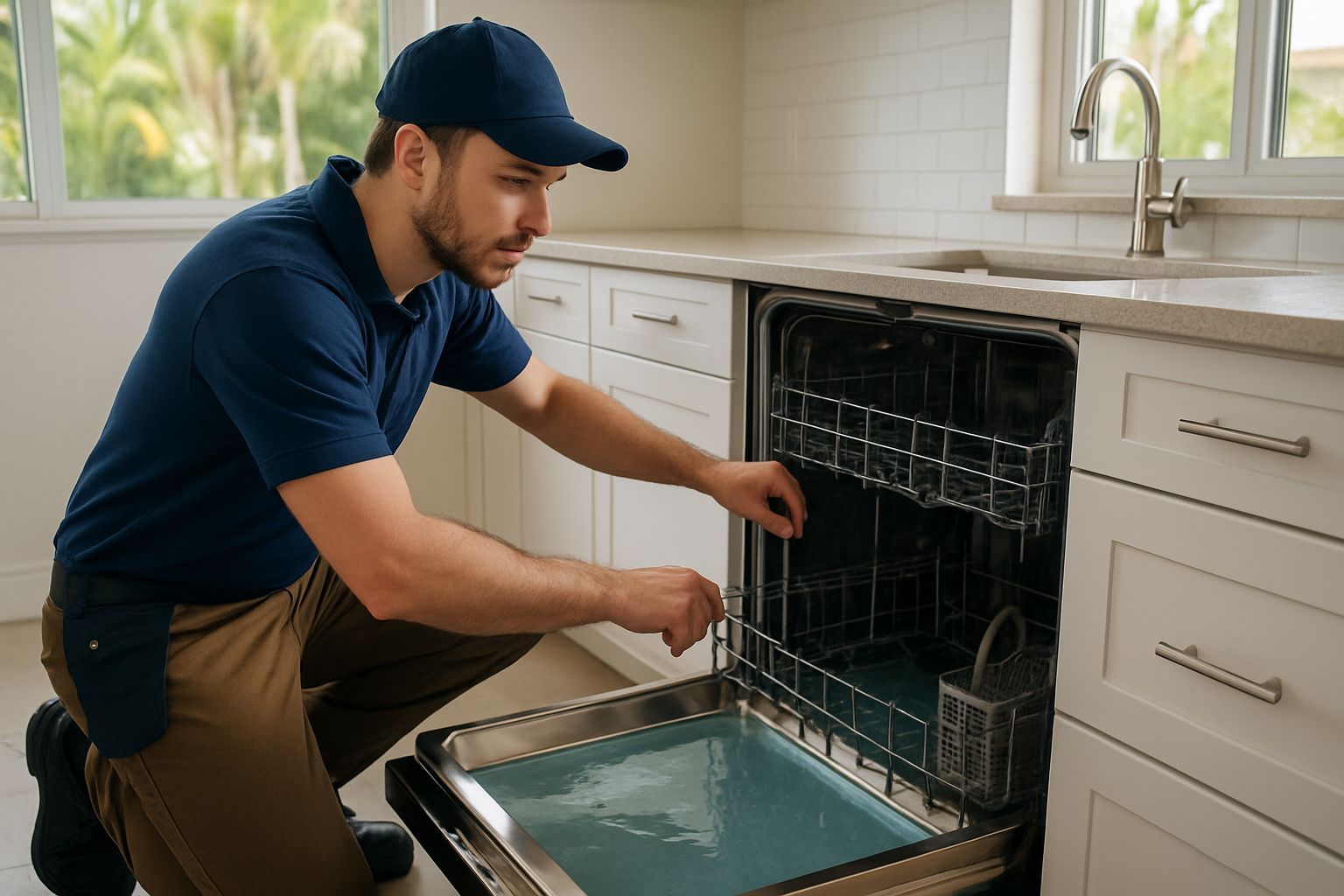
After cooling, remove dishes and inspect the lower rack, door gasket, and tub bottom. Look for warped plastic, a melted utensil handle, a loose label, or a rack accessory that may have moved. Do not touch, scrape, or try to straighten a heating element.
If one item clearly melted and no other warning signs occurred, remove it and note its location. If the odor returns with an empty or carefully loaded dishwasher, the source is likely internal. For dishwasher repair in Boynton Beach, professional inspection is the safer next step when the cause is not obvious.
When the Smell Starts Can Narrow the Search
Cycle timing provides useful clues, although it cannot confirm a failed part by itself. An odor during wash circulation may point toward the circulation motor, its electrical connections, or an object moving around inside the tub. Record any humming, weak washing action, or interrupted wash phase.
If the smell begins while water is heating, the heater circuit, terminals, wiring, and control operation should be checked. Proper fill and circulation matter because poor circulation can create an abnormal heat pattern. Replacing a heater without checking the rest of the system can miss the actual fault.
An odor near the end of a cycle may involve a drying function or a connection that overheats later. If the dishwasher fills but hums or does not wash normally, review this guide to a dishwasher that fills with water but will not wash.
Why an Electrical Odor May Not Trip the Breaker
A breaker protects against certain overcurrent conditions, but it may not trip immediately when one connection overheats. A loose or corroded terminal can create resistance at a small point. That resistance produces heat, which can damage insulation or connector housings before the circuit draws enough current to trip the breaker.
The symptom can be misleading. A failed control board may contribute to overheating, but a sensor problem, damaged wire, or poor connection can also affect control behavior. A technician checks control outputs and safety circuits along with heater and motor wiring.
Do not remove access panels or investigate wiring yourself after an electrical smell. For appliance repair in Lake Worth Beach, share when the odor started and whether there was smoke, noise, leaking, or a breaker event.
Frequently Asked Questions About a Dishwasher That Smells Like Burning Plastic
Why does the smell happen near the end of the cycle?
Late-cycle odors can occur during heating or drying. A plastic item may reach a hotter area then, but an electrical connection can also overheat later.
Can plastic touching the heating element cause this smell?
Yes. A lightweight plastic item can shift onto an exposed heating element and melt. Not every dishwasher uses the same heater design, however.
Is it safe to run another cycle after smelling hot plastic?
Do not run another cycle if there was smoke, sparking, a breaker trip, or no visible melted item. Keep the dishwasher off until inspected.
Can an electrical connection smell without tripping the breaker?
Yes. A damaged wire, terminal, or connector can overheat locally without immediately drawing enough current to trip the breaker.
What details should I give the technician?
Describe the selected cycle, when the smell started, any melted item, smoke, humming, weak washing, drainage trouble, leaks, error codes, or breaker trips.
A burning-plastic smell is not normal. A visible melted item may explain it, but a recurring odor without one needs professional diagnosis before the dishwasher is used again.