
Why Does My Gas Oven Preheat Normally but Stop Reigniting After It Reaches Temperature?
By General Appliance Service
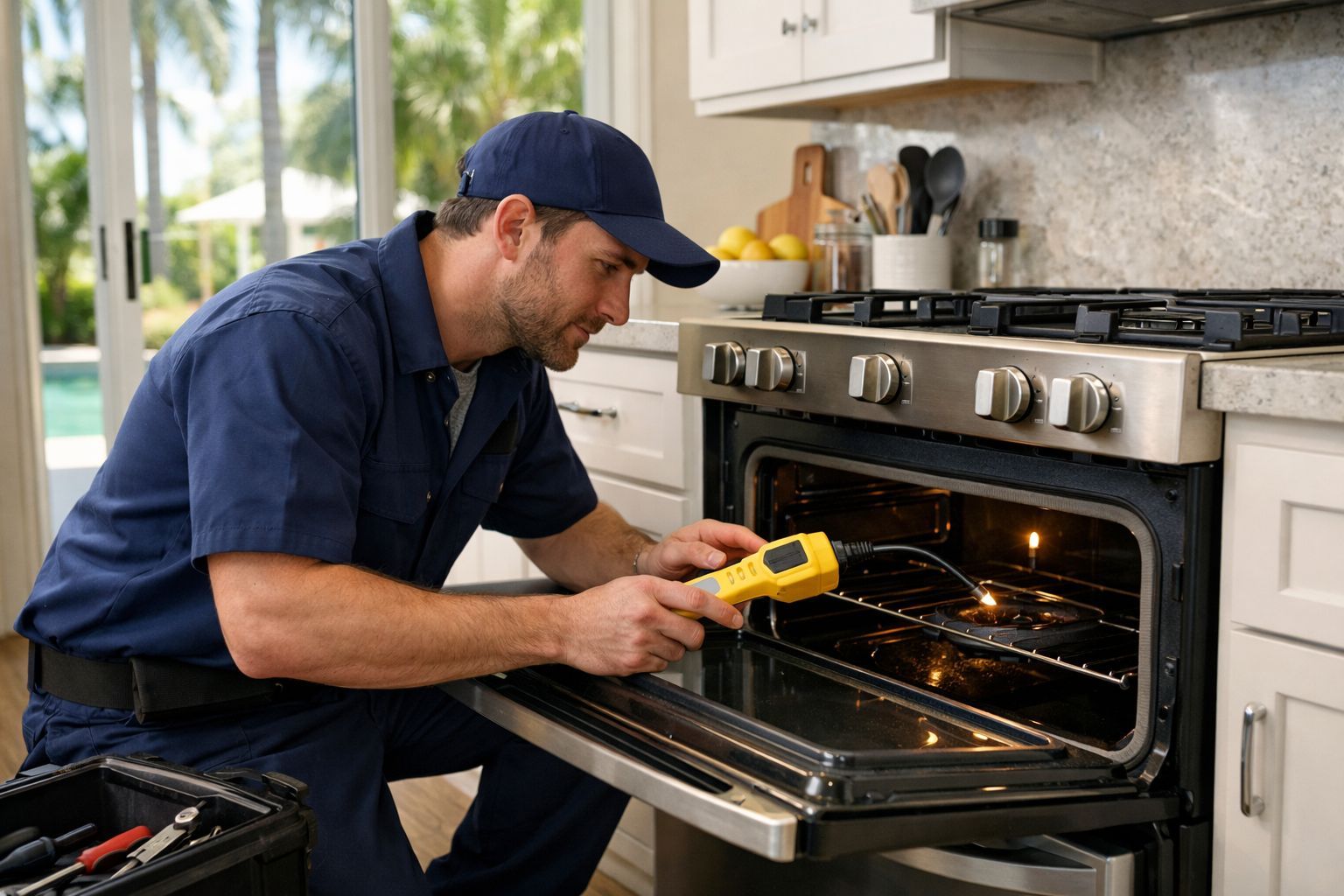
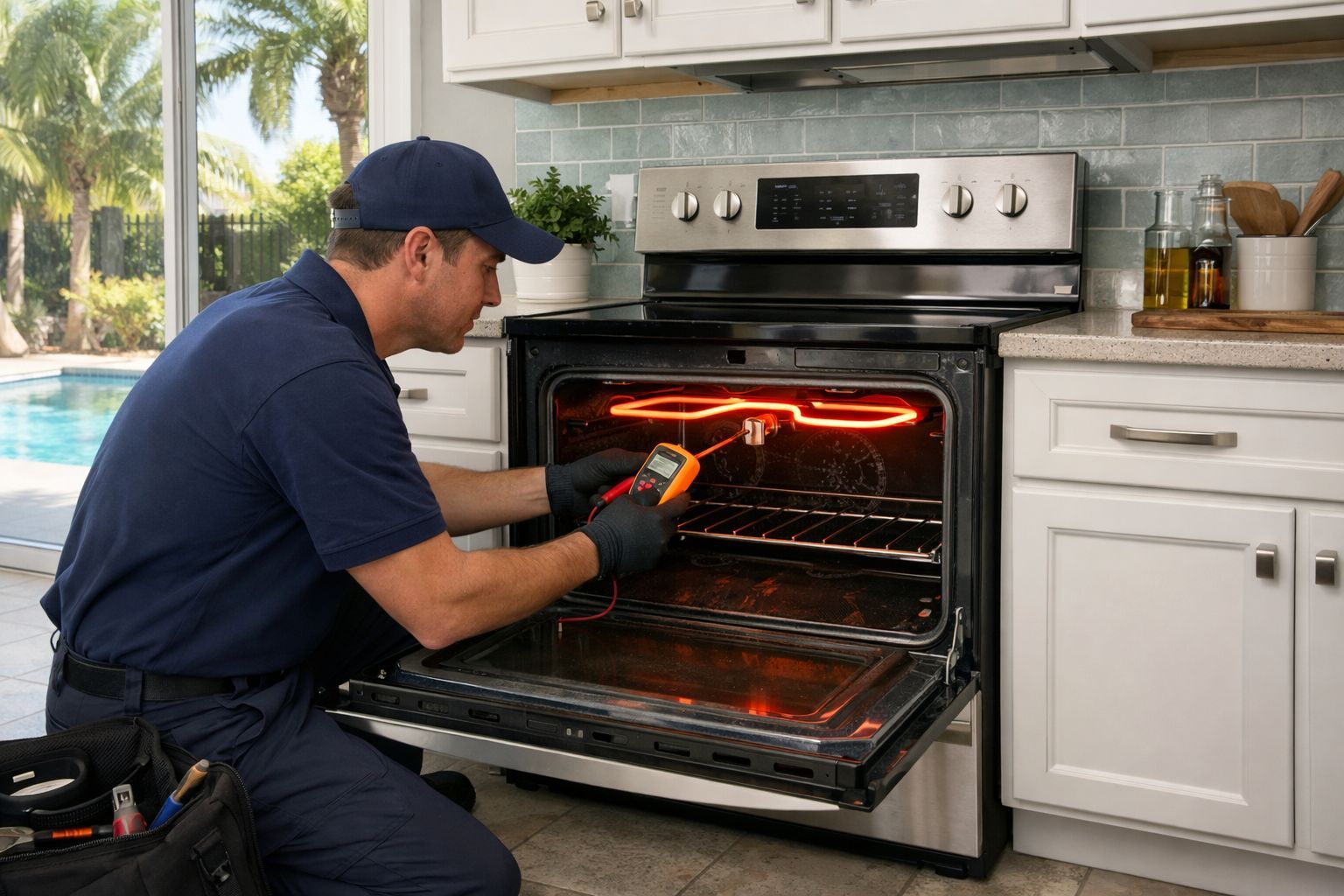
A gas oven that will not reignite after preheat can reach temperature once and then lose baking heat. The first successful ignition does not prove later heat cycles will work. Ignition, temperature sensing, valve operation, wiring or controls may need diagnosis; a glow or clicking sound alone does not establish the cause.
Reaching temperature once is different from maintaining it
After preheat, normal operation includes intervals when the bake burner is off. The control should request heat again as needed. A brief off period is different from persistent cooling and undercooked food. Observe the cooking mode, displayed status and error codes without opening burner compartments. Do not repeatedly restart an oven that fails to relight.
Gas oven keeps turning off when preheating: is this the same problem?
Not necessarily. If the oven cannot finish its initial preheat, it has a different timing pattern from an oven that reaches temperature and fails during later cycling. Record whether the preheat signal occurred and when heat was lost. This distinction helps a technician reproduce the symptom without assuming the same repair applies to both.
What the later ignition attempt may reveal
| Observed behavior | Possible diagnostic direction | Homeowner action |
|---|---|---|
| Igniter glows, but heat does not return | On a glow-bar model, ignition performance and the valve/control path need verification. | Report the symptom; do not expose or test the igniter. |
| Repeated clicking without sustained heat | On a direct-spark model, ignition and flame recognition may need checks. | Stop repeated attempts and arrange service. |
| No apparent relight attempt; oven cools | Temperature input, control demand, wiring or ignition supply may be involved. | Record mode/error codes; absence of sound does not identify a part. |
Why an igniter or control board should not be assumed
Many glow-bar systems require appropriate igniter current before the safety valve opens; visible glow alone is not a complete performance test. Direct-spark systems use different ignition and flame-recognition methods. A qualified technician should verify the model’s sequence, sensor input, ignition performance, valve operation and connections using manufacturer procedures. These are technician checks, not homeowner tests.
If the preheat signal appears normal but food remains undercooked, see why an oven says it is preheated but food is still undercooked.
Gas odor or delayed ignition requires stopping use
If you suspect a gas leak or notice strong or persistent gas odor, leave the area. Do not operate electrical switches, unplug appliances, use a phone inside or try another ignition. Contact the gas supplier or emergency services from a safe location and follow their instructions. Do not open panels, disconnect gas lines, bypass safety devices or attempt manual ignition.
Delayed ignition, a boom, soot or abnormal flame also warrants leaving the oven unused until inspected. Do not attempt to reproduce these signs for a video.
Frequently asked questions
Can an igniter glow and still need diagnosis?
Yes. Glow does not prove the ignition system meets the model’s operating requirements.
Is it normal to smell gas when preheating an oven?
Do not dismiss strong, persistent or unusual odor as normal. Follow the gas-odor precautions above and your manufacturer’s instructions.
Does broil working prove Bake is safe?
No. The modes can use different components. Report what you already observed rather than testing more modes after a warning sign.
For a persistent relighting problem without an active gas emergency, see gas oven and cooktop repair or request service. Include the model, mode and point in the cycle when heating stopped.