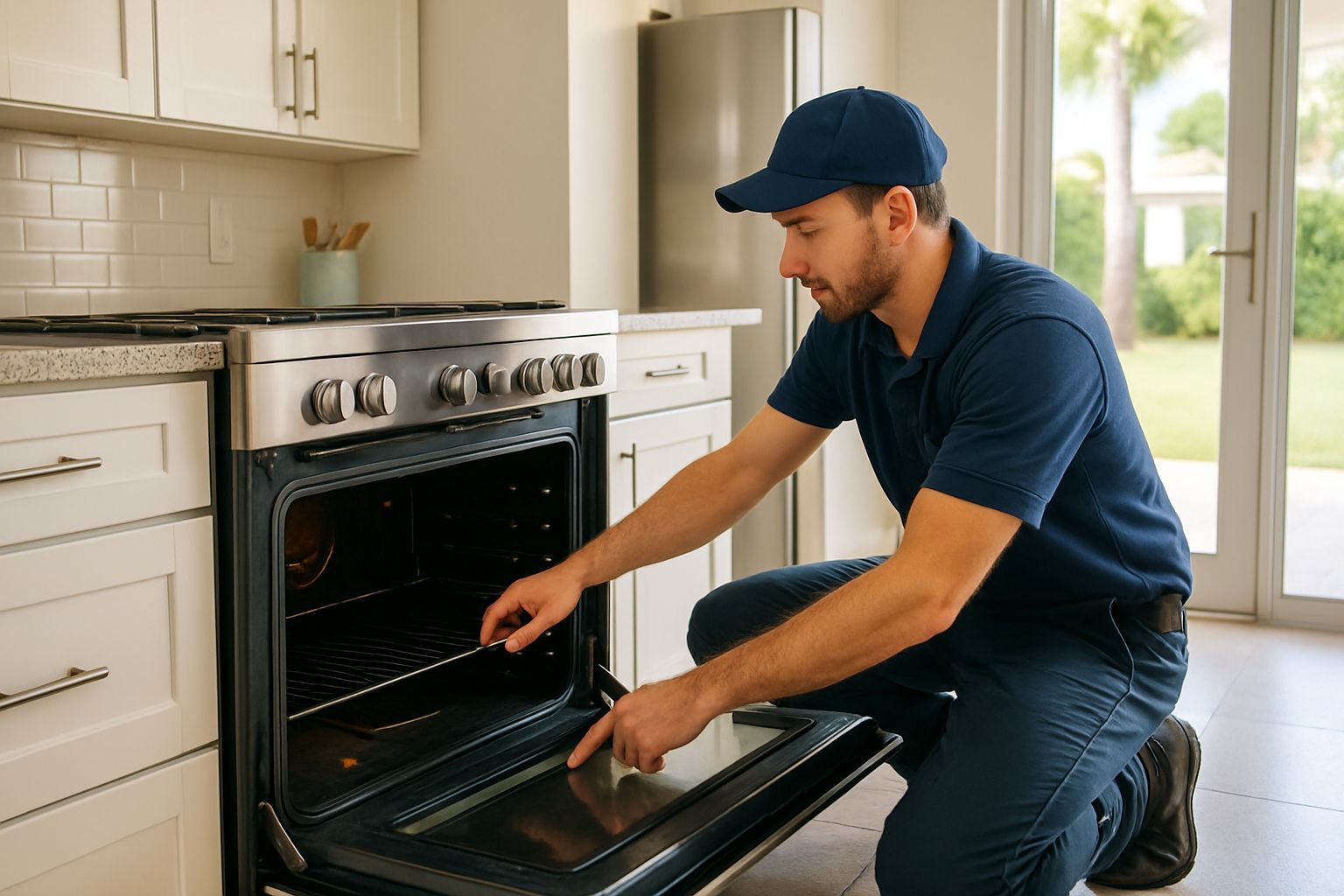

Why Does My Oven Say It’s Preheated but Food Is Still Undercooked? What a Technician Checks
Oven says it’s preheated but food still comes out undercooked? Learn what technicians check for slow preheating, weak igniters, bad elements, sensors, controls, and heat loss.
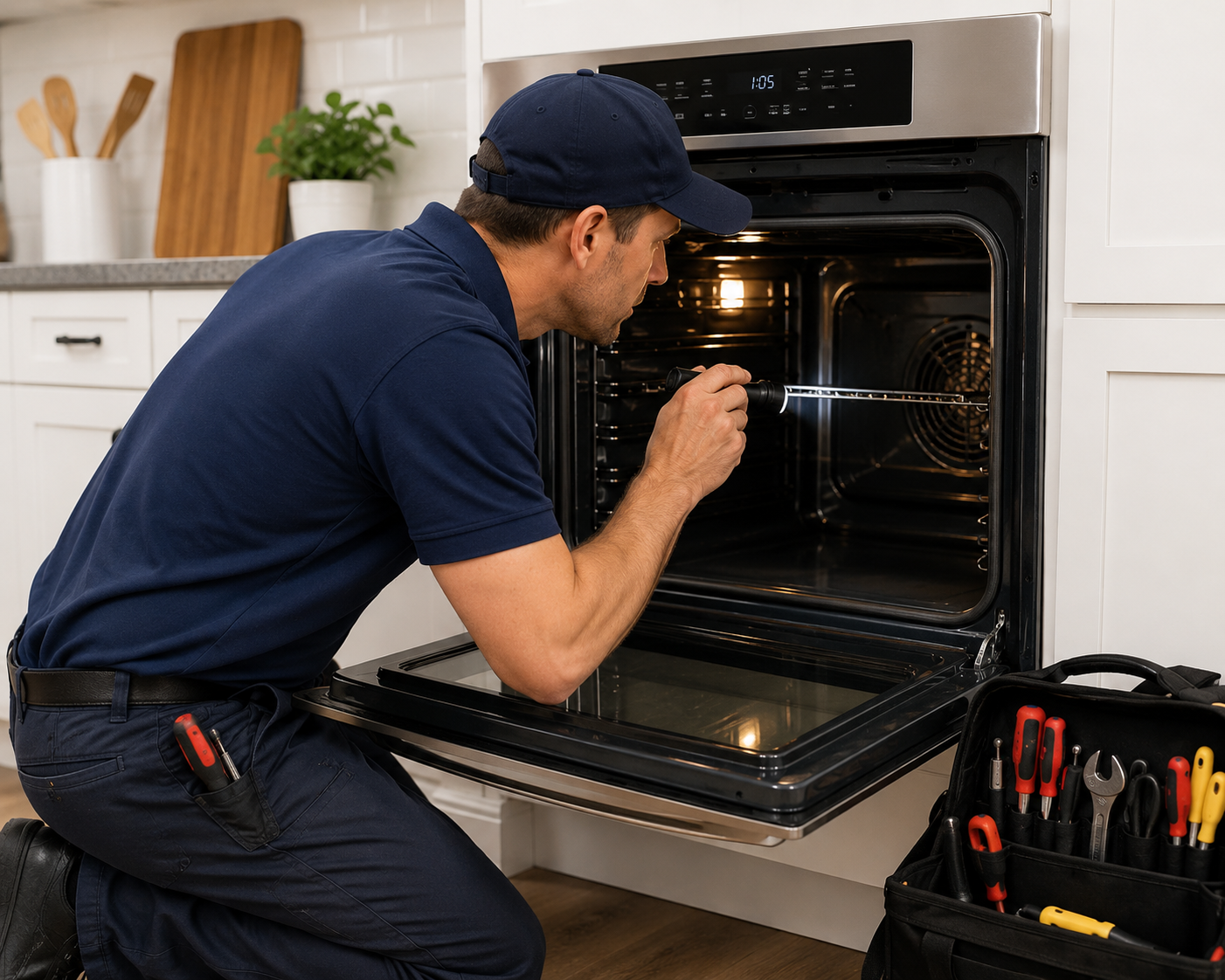
Your oven beeps, the display says it is preheated, and everything looks normal. Then dinner takes 20 minutes longer than usual, cookies stay pale, or a casserole is still cold in the center. When an oven says it is ready but does not cook correctly, we do not automatically blame the temperature sensor or control board. We first figure out whether the oven is producing enough heat, sensing temperature correctly, and holding that heat inside the cavity.
This is an important distinction when diagnosing an oven not heating properly. An oven can technically get warm and still have a failure. A weak heating component, delayed gas ignition, damaged wiring, temperature-sensing issue, or heat loss through the door can all create similar symptoms.
The Preheat Beep Does Not Tell the Whole Story
Many homeowners assume the oven must be exactly 350°F throughout the entire cavity when the preheat signal sounds. In reality, the control is responding to its temperature sensor and the preheat programming built into that particular model. The metal walls, racks, cookware, and air inside the oven can still be stabilizing after the beep.
A little temperature cycling is normal. What gets our attention is a noticeable change in performance. If the same oven used to preheat and bake normally but now takes much longer, consistently undercooks food, or struggles to recover after the door is opened, there is usually something worth diagnosing.
An Electric Oven Can Heat With a Failed Bake Element
This causes a lot of confusion. Many electric ovens use both the bake and broil elements during preheat. Depending on the design, one element may provide most of the normal baking heat while the other assists with bringing the oven up to temperature quickly.
If the bake element fails but the broil element continues working, the oven may still get hot. It can even eventually reach the selected temperature. The clue is that preheating takes much longer and food does not cook the way it used to.
Some failed elements are obvious. You may see a blister, burned area, crack, or section that no longer heats. Others are hidden underneath the oven floor and cannot be visually inspected without accessing the appliance. That is why a technician tests the heating circuit instead of replacing a part simply because the oven feels cooler than expected.
If your oven takes much longer than normal to preheat or food keeps coming out undercooked, professional oven not heating repair can help determine whether the problem is an element, igniter, sensor, wiring issue, or control problem.
A Gas Oven Igniter Can Glow and Still Be Bad
Gas ovens have their own version of this problem. Many models use a hot-surface igniter to operate the oven safety valve. One of the most misleading symptoms we see during diagnosis is an igniter that glows but has become electrically weak.
If initial preheating succeeds but heat later disappears, see why a gas oven stops reigniting after preheat.
The igniter has to draw enough electrical current for the gas valve to open correctly. As an igniter ages, it may continue glowing while taking longer and longer to open the valve. The homeowner notices a slow preheat, delayed burner ignition, or an oven that loses temperature between heating cycles.
That is why looking through the oven and seeing an orange glow does not prove the igniter is good. Proper diagnosis involves checking how the ignition system is actually operating rather than judging the igniter only by appearance.
If you smell gas, hear repeated clicking without ignition, or notice the burner taking an unusually long time to light, stop using the oven until the problem is inspected. Gas ignition problems should not be treated as trial-and-error DIY repairs.
What the Oven Temperature Sensor Actually Does
The oven temperature sensor tells the electronic control what is happening inside the cavity. Its electrical resistance changes with temperature, and the control uses that information to decide when to energize or shut down the heating circuit.
If the sensor or its wiring gives the control inaccurate information, the oven may shut the heat off too early or cycle incorrectly. But the sensor should be tested before it is replaced. Wiring connections, control relays, heating components, and the incoming electrical supply can produce symptoms that look very similar.
This is one reason searching for appliance repair near me can make more sense than ordering several parts and hoping one fixes the problem.
One Thermometer Reading Can Be Misleading
Homeowners often put an inexpensive thermometer inside the oven, see the temperature drop below the setting, and assume the oven is defective. But ovens normally cycle above and below the selected temperature. The heating element or burner turns on, the temperature rises, the heat shuts off, and the temperature gradually falls before the next heating cycle begins.
What matters is the overall temperature pattern over multiple cycles. A technician may monitor several heating cycles and compare the average temperature with the selected setting. We also pay attention to how quickly the oven recovers after the door is opened.
If the temperature repeatedly falls far below the expected range or takes an excessive amount of time to recover, that points us toward a real heating or sensing problem.
The Oven May Be Producing Heat but Losing It
Sometimes the heating system is doing its job, but the oven cannot retain the heat properly. A damaged door gasket, weak hinge, bent door, or obstruction preventing the door from closing completely can allow hot air to escape.
This can create long preheat times and poor recovery after the door is opened. You may also notice extra heat around the front of the appliance or food cooking differently depending on which rack is being used.
Convection ovens add another area to check. If the selected cooking mode relies on a convection fan and the fan is not operating correctly, heat distribution can suffer. Food may brown heavily on one side while remaining undercooked on another.
Why Bake and Broil Should Be Compared
One useful clue is whether Bake and Broil behave differently. If Broil heats strongly but Bake struggles, the problem may be concentrated in the bake circuit. If neither mode heats correctly, the technician may need to look farther upstream at the power supply, wiring, control, safety devices, or other shared components.
On an electric range, a partial power problem can sometimes allow lights and controls to operate while the oven heating circuits do not receive what they need. That is another reason a working display does not automatically mean the appliance has proper power for heating.
What You Can Check Before Calling an Oven Technician
Start by paying attention to the symptoms. Does Bake work differently from Broil? Does the oven eventually reach temperature but take much longer than before? Does a gas burner ignite immediately or sit there for an unusually long time before lighting? Is there an error code on the display?
Check that the oven door closes evenly and that nothing is interfering with the gasket. If your electric oven has visible elements, inspect them while the appliance is completely cool and turned off for obvious damage such as cracks, blisters, or burned areas.
Do not remove live electrical panels or attempt voltage measurements inside an operating range unless you are trained to work around high-voltage appliances. Electric ovens commonly use 240-volt circuits, and gas ovens add fuel and ignition hazards.
If you are in Palm Beach County, our oven repair in West Palm Beach information can help you find local service. You can also schedule oven repair service when an oven continues cooking slowly or will not maintain temperature.
Frequently Asked Questions
Why is my oven taking so long to preheat?
A slow-preheating oven may have a failed or weakened heating element, weak gas igniter, temperature-sensor problem, damaged wiring, control issue, door-sealing problem, or another condition reducing heat output. If the preheat time suddenly becomes much longer than it used to be, that change is an important diagnostic clue.
Why does my oven say it is preheated when it is not hot enough?
The control determines when to signal preheat based on information from the temperature sensor and the manufacturer's programming. A sensor problem can cause inaccurate readings, but heating-element problems, igniter issues, wiring failures, and heat loss can also make actual cooking performance fall short even when the display appears normal.
How do I know if my oven heating element is bad?
Obvious signs include cracks, blistering, burned sections, sparking, or an element that does not heat. However, some elements fail without dramatic visible damage. A proper electrical test can confirm whether the element has continuity and whether it is receiving the power required during operation.
Can a gas oven igniter glow and still be defective?
Yes. A hot-surface igniter can glow while failing to draw enough current to operate the gas safety valve correctly. Slow ignition and unusually long preheat times are common symptoms of a weakening igniter.
Why is my oven cooking food unevenly?
Uneven cooking can be caused by a heating element problem, weak convection airflow, temperature-sensing issue, improper rack placement, heat escaping around the door, or a problem that prevents the oven from maintaining an even temperature throughout the cooking cycle.
Is it worth repairing an oven that is not heating correctly?
Many oven heating problems are repairable. A failed element, igniter, sensor, wiring connection, or other individual component can often be repaired without replacing the entire appliance. The oven's age, overall condition, parts availability, repair history, and estimated repair cost should all be considered.
When should I stop using my oven and call for repair?
Stop using the oven if you smell gas, see electrical arcing or sparking, experience repeated breaker trips, notice delayed gas ignition, or see a heating element burning through. Those symptoms should be professionally diagnosed rather than repeatedly testing the oven.
New Paragraph