
Why Does My Dryer Stop Mid-Cycle Then Start Again After Cooling Down?
By General Appliance Service
What a Technician Checks When a Dryer Stops Mid-Cycle
A dryer that stops mid-cycle and works again after cooling down should not be ignored. The cooldown period may mean a motor’s internal thermal protector has opened, or that heat is building where it should not. It does not automatically mean the motor has failed. Airflow restrictions, mechanical drag, wiring concerns, and heating or control problems can produce similar symptoms.
Notice What Stops First During the Cycle
“The dryer shut off” can describe several different failures. If the display goes dark and the dryer loses all response, the issue may involve household power, the power cord, terminal connections, wiring, or controls. If the controls remain lit but the drum stops, the motor, belt, drum load, door-switch circuit, or motor wiring becomes more relevant.
Also note whether the dryer runs on Air Fluff or another no-heat setting but quits during a heated cycle. Added heat may be contributing, but the cause could still be airflow, thermostatic devices, supply voltage, heating components, or controls.
Before scheduling service, write down how long the dryer runs, whether the drum or display stops first, and whether it restarts immediately or only after resting. Those details help narrow the diagnosis safely.
Check Airflow and Heat Buildup Early
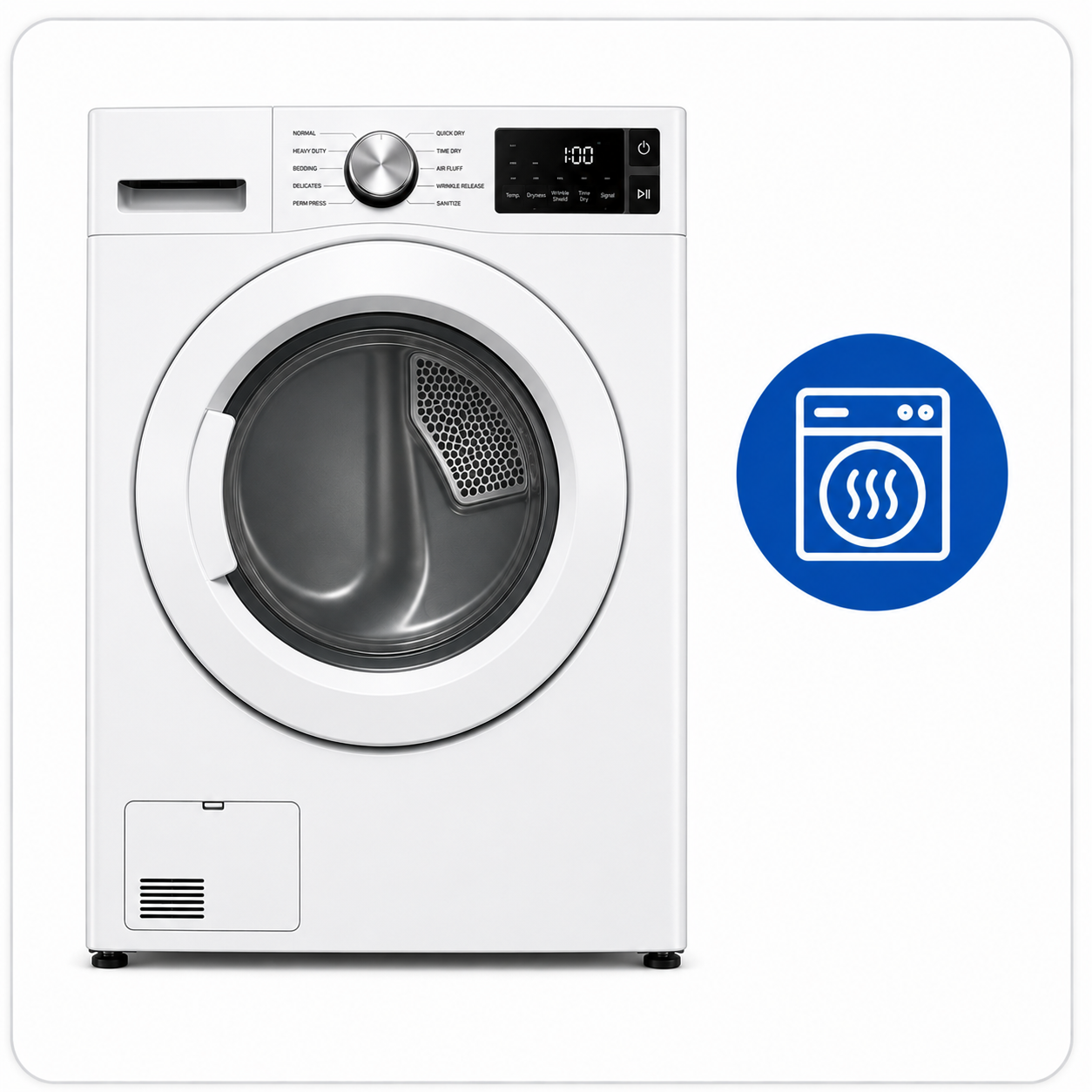
Restricted airflow is one of the first conditions to consider. A dryer needs a clear route from the lint screen through the blower housing, exhaust duct, and outdoor hood. When that path is restricted, hot, moist air remains in the machine longer, drying slows, and temperatures can rise enough to affect heat-sensitive components.
A clear-looking outdoor hood does not rule out a problem. Lint can collect inside the duct, a flexible connector can sag behind the dryer, and the blower wheel or internal lint path can become obstructed.
After the dryer cools, clean the lint screen. During one short, attended test, confirm that the outside hood opens while the dryer runs. Stop testing if it shuts off again, smells hot, or produces a burning or electrical odor. A dryer that runs but does not heat can follow a different pattern; see our guide to a dryer runs but has no heat.
A Motor Protector Is a Clue, Not a Diagnosis
Many dryer motors include internal thermal protection. If the motor becomes too hot, the protector can interrupt operation. After cooling, it may reset and allow the dryer to run again. That explains why some dryers work after a 10- or 20-minute rest.
The motor may be failing internally, but it may also be working too hard. Overloaded loads, worn drum rollers, a seized idler pulley, belt-related drag, or resistance in the blower assembly can increase motor load. Restricted airflow can trap heat around the motor as well.
More than one condition may be present. For example, a partially restricted vent and aging drum support parts can both contribute to overheating. Replacing a motor without checking ventilation and mechanical drag may leave the actual cause unresolved. Use normal-sized loads until the problem is diagnosed, and never bypass safety switches or remove panels for live testing.
When Professional Service Is the Safer Next Step
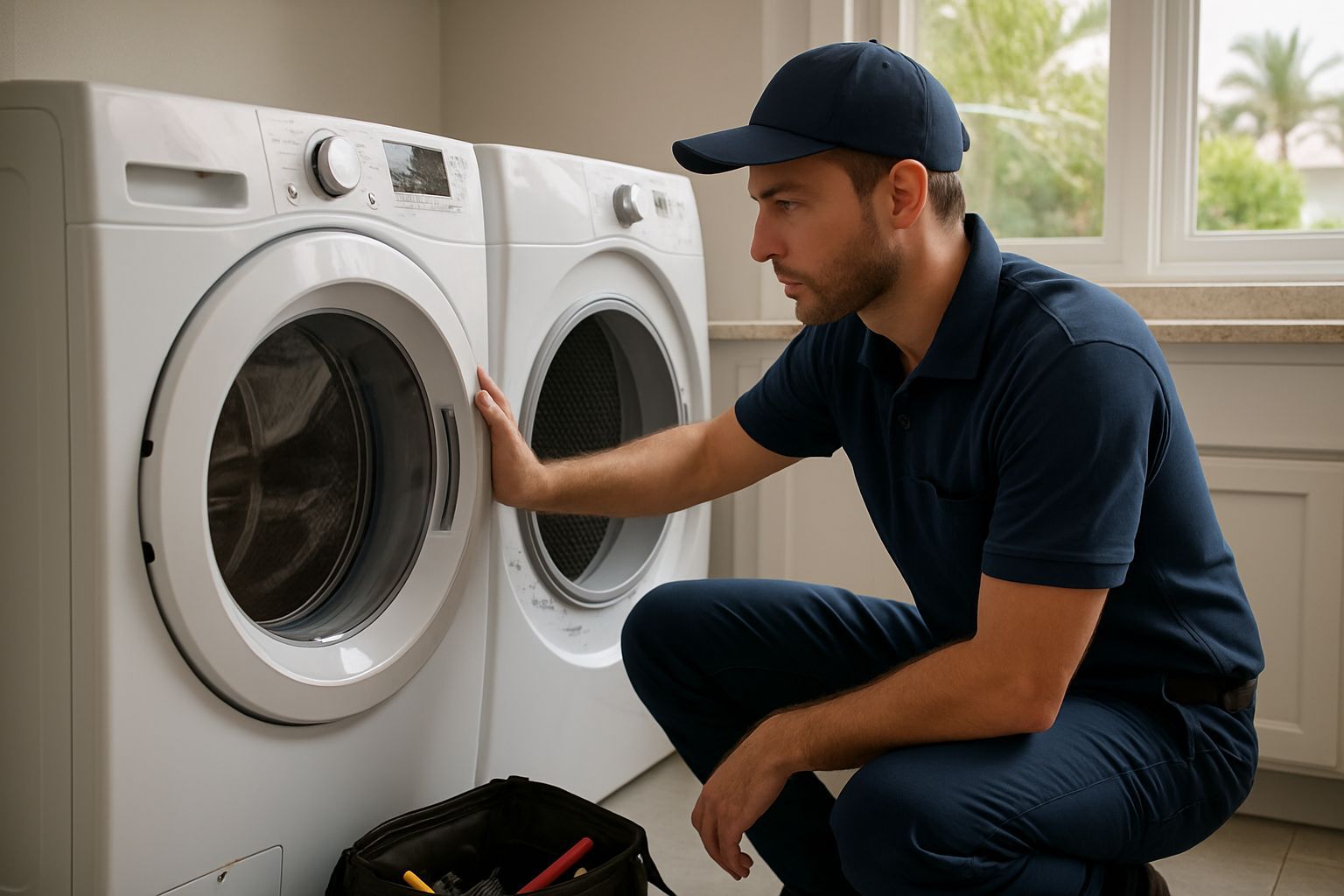
A technician determines whether motor operation, heat, display power, or cycle progression disappears first. Inspection may include the exhaust route, lint path, blower wheel, belt, drum support system, motor behavior, supply voltage, terminals, thermostatic devices, sensors, heating components, wiring, and control outputs.
Thermal devices and control boards should not be replaced based on symptoms alone. A component may be reacting to overheating, incorrect voltage, or inaccurate sensor information rather than causing the original fault.
General Appliance Service provides washer and dryer repair for intermittent laundry problems involving heat, tumbling, and airflow. Homeowners seeking appliance repair in West Palm Beach should arrange an in-person diagnosis when a dryer repeatedly stops after warming up.
Unplug the dryer and stop using it if you notice smoke, scorching, a strong burning smell, repeated breaker trips, or abnormal restarting.
Frequently Asked Questions About a Dryer Stops Mid-Cycle Then Starts Again After Cooling Down
Why does my dryer stop after 10 or 20 minutes?
A heat-sensitive motor protector may be opening. Internal motor failure, drum drag, restricted airflow, or trapped heat can cause overheating and require testing.
Can a clogged dryer vent shut off the dryer?
Yes. A restricted vent can trap heat and reduce airflow. However, an opening outdoor hood does not prove the entire vent and lint path are clear.
Why does it work on Air Fluff but stop with heat?
Added heat is likely involved. Airflow restrictions, heating-circuit faults, thermostatic devices, wiring, or controls may cause the dryer to stop during heated operation.
Is it safe to keep restarting an overheating dryer?
No. Repeated restarting can worsen an overheating condition and hide an electrical, motor, or airflow problem. Stop immediately if smoke, odors, or scorching appear.
Does this symptom mean the motor needs replacement?
Possibly, but not always. Worn rollers, a binding blower wheel, belt drag, and ventilation problems can overload a motor and mimic motor failure.
A dryer that resumes after cooling is providing a useful warning. Recording the shutdown conditions and checking airflow, mechanical load, and electrical circuits can prevent an intermittent problem from becoming a complete no-start failure.