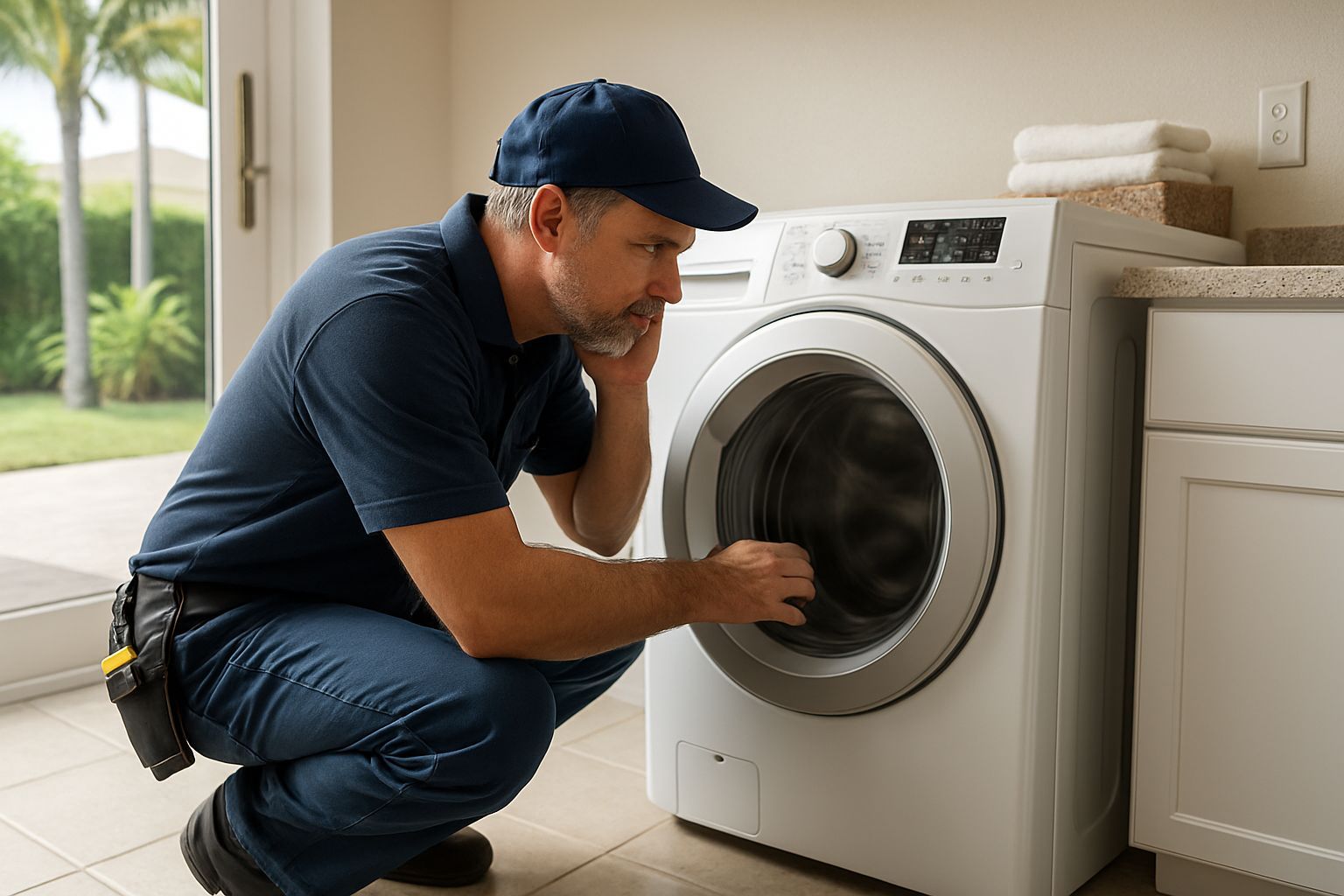

Washer Smells Like Burning Rubber During Spin? What the Problem May Really Be
By General Appliance Service
Washer Smells Like Burning Rubber During Spin? What the Problem May Really Be
A washer that develops a burning-rubber smell during the spin cycle should be taken seriously. Stop the cycle, unplug the machine, and let it cool before running another load.
The smell does not automatically mean the drive belt is bad. Some washers do not even use a belt. A slipping belt can certainly create a hot-rubber odor, but a jammed pump, a seized bearing, a binding transmission, an overloaded motor, or an electrical problem can produce a very similar smell. The useful question is not “Which part smells burned?” It is “What is making the motor work harder than it should?”
Why a Washer Can Smell Like Burning Rubber During Spin
Spin is the hardest part of a wash cycle. The machine has to remove water, turn a heavy basket of wet laundry, and bring that load up to high speed without excessive vibration. A small mechanical problem that goes unnoticed during washing can become obvious once the basket tries to spin.
On belt-driven washers, the belt may slip because it is worn, oily, loose, or trying to turn a component that is partially seized. Replacing the belt without finding out why it slipped can leave you with the same smell—and a damaged new belt—after only a few loads.
One problem technicians commonly find is resistance somewhere beyond the motor. A drain pump with an object caught in it, a failing tub bearing, clothing trapped between the baskets, or a drive assembly that is binding can force the belt or motor to work against too much load. In older washer designs, an internal mechanical issue may also keep the basket from engaging properly during spin.
First, Notice When the Smell Appears
The timing of the odor helps narrow the diagnosis.
If the washer smells only during high-speed spin, pay attention to whether the basket is actually accelerating. A belt may be slipping, the load may be badly off-balance, or the machine may be struggling to turn the basket. If the washer hums, stops, then starts again after cooling down, the motor’s thermal protector may be opening because the motor is overheating.
A smell that starts during draining points in a different direction. The drain pump runs before and during spin on many machines. A small sock, hairpin, bra wire, or other foreign object can restrict the impeller. The pump may still move some water, but it can become noisy, hot, or difficult to turn.
An electrical smell is different from hot rubber. It is often sharper and can resemble hot plastic, varnish, or overheated wiring. Do not keep testing the washer if you notice smoke, a tripped breaker, sparking, or a strong electrical odor. A motor can overheat because of an internal fault, but technicians also check switches, wire terminals, and controls that may be supplying the motor incorrectly.
Safe Checks Before You Run Another Load
Once the washer is unplugged, start with the simple observations.
Look inside the basket for a garment caught around the edge, especially near the top of the tub. Check beneath the machine for water, dark oily residue, rubber dust, or black belt debris. A belt that has been slipping often leaves fine black material around the motor area or lower cabinet.
Try turning the empty basket by hand. It should move smoothly. Some resistance is normal, especially on top-load machines, but grinding, scraping, a hard spot, or a basket that feels unusually stiff is worth noting.
Also think about the load that was in the washer. A single bath mat, comforter, or a few heavy towels can gather on one side and repeatedly throw the machine out of balance. Modern washers may pause or reduce spin speed to protect themselves. That should not create a burning smell on its own, though. If the smell returns with a normal, balanced load, there is likely more to diagnose.
Avoid removing panels or bypassing a lid switch or door lock. Those safety devices prevent the washer from spinning with the lid or door open. Live electrical testing around a wet appliance is not a homeowner repair.
Why Replacing the Belt May Not Fix the Washer
A belt is often blamed because it is visible and inexpensive. But belts usually slip for a reason.
If a pump, transmission, pulley, clutch, bearing, or basket-drive component is binding, the motor has to overcome that resistance. The belt becomes the weak link and heats up. Installing another belt may temporarily reduce the smell, then bring it right back once the new belt starts slipping under the same load.
The same principle applies to motor problems. A motor that cannot reach normal speed, has damaged windings, or receives the wrong electrical signal can run hot and cycle off on its internal overload. On certain designs, a faulty speed selector, timer contact, relay, or control can keep more than one motor winding energized when it should not be. That is why a technician confirms the mechanical load and the electrical supply before condemning the motor.
For a recurring odor, professional washer and dryer repair is the sensible next step. General Appliance Service can determine whether the problem is a slipping drive component, a restricted pump, a bearing issue, or an electrical failure before unnecessary parts are installed.
When the Washer Should Stay Off Until It Is Checked
Leave the washer unplugged if it produces smoke, trips a breaker, makes a loud grinding noise, leaks underneath, or develops a strong burning smell after only a few seconds of operation.
A faint rubber odor from one severely overloaded load may not mean the machine has failed. A repeat odor with ordinary laundry is different. Continued use can damage a belt, motor, wiring, or control board that might otherwise have been repairable.
For homeowners who need appliance repair in Delray Beach, describing exactly when the smell starts—drain, agitation, or spin—can help point the diagnosis in the right direction.
Frequently Asked Questions About a Washer Smelling Like Burning Rubber
Can I use my washer if it smells like burning rubber?
No. Stop the machine and unplug it first. If the odor returns after the washer has cooled and you run a normal balanced load, it needs diagnosis before further use.
Does a burning-rubber smell always mean a bad washer belt?
No. The belt may be slipping, but the underlying cause could be a binding pump, bearing problem, overloaded drive system, or another mechanical fault.
Why does my washer smell only during spin?
Spin places the greatest load on the drive system because the washer must rotate wet laundry at high speed. A weak belt, worn clutch, restricted pump, or failing bearing may only show up then.
Can an unbalanced load cause a burning smell?
A badly uneven load can strain the drive system, especially in older machines. However, a healthy washer should not repeatedly smell burned during routine loads, so do not assume laundry balance is the only issue.
What does an electrical burning smell from a washer mean?
It can indicate overheating motor windings, damaged wire connections, a failing switch, or a control problem. Unplug the washer and do not continue testing it if the smell is sharp, strong, or accompanied by smoke or a tripped breaker.
A washer that smells burned is giving you useful information: something is slipping, overheating, or binding. Catching the cause early is usually far less expensive than continuing to run the machine until the drive system or electrical components suffer additional damage.