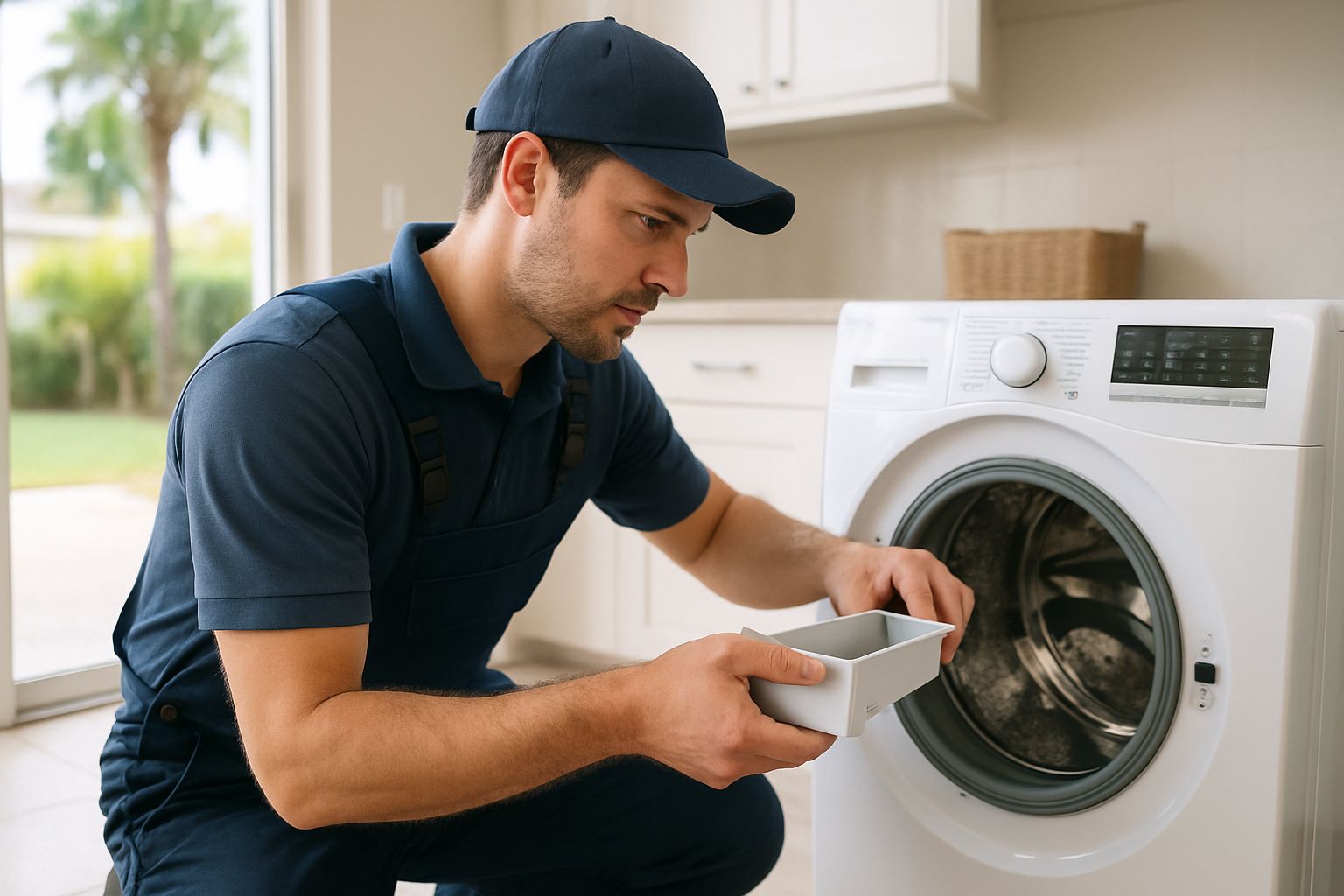

Why Does My Washer Fill With Water But Not Spin? What a Technician Checks First
Washer fills with water but won’t spin? Learn what an appliance technician checks first, including lid locks, drain issues, drive parts, and control problems before replacing parts.
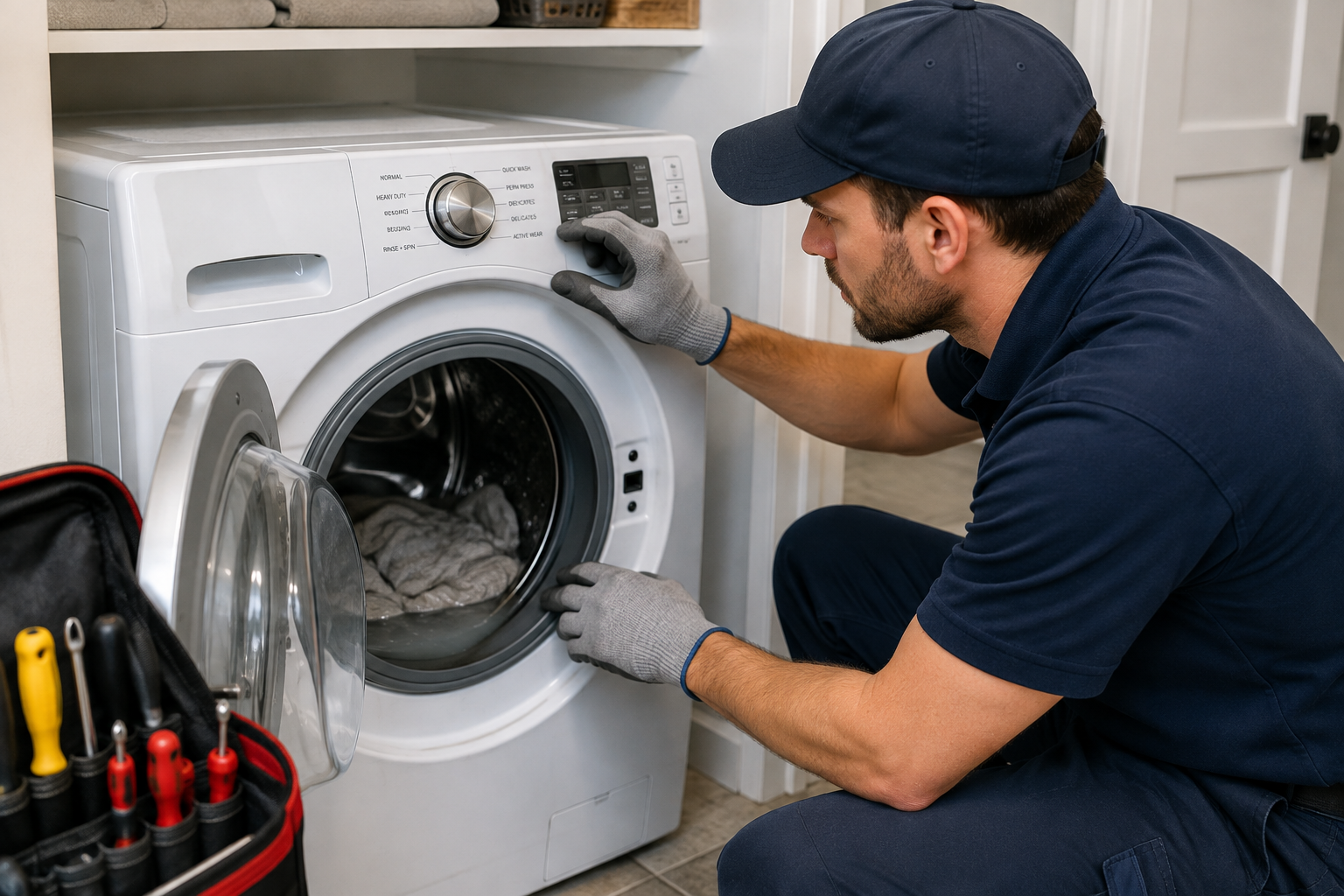
A washer that fills normally and then refuses to spin can be confusing because part of the machine is clearly working. Water enters the tub, the control responds, and the cycle may even begin normally. Then the washer stops progressing, leaves clothes soaking wet, or finishes with water still inside. From a technician's point of view, “fills but won't spin” is a symptom, not a diagnosis. Several different systems have to work together before the control will allow the basket to reach full spin speed.
One of the biggest mistakes we see with this type of problem is replacing parts before determining exactly where the cycle is stopping. If you are searching for washer repair near me, the most useful information you can provide is whether the washer drains, whether the lid or door locks, whether the basket tries to move, and whether any error code appears.
First Determine Whether the Washer Is Draining
Before many washers will enter high-speed spin, the control needs to see that most of the water has left the tub. If the machine cannot drain correctly, it may never move into the spin portion of the cycle.
A restricted drain pump, clogged pump filter, kinked drain hose, foreign object in the pump, or household drain problem can all create this symptom. Sometimes the washer hums while trying to drain. Other times it simply pauses and eventually ends the cycle with wet clothes.
A homeowner can safely look for an obvious kink in the drain hose and check whether water remains in the tub. If the manufacturer provides a homeowner-accessible pump filter, follow the owner's manual carefully and be prepared for water to come out. Always disconnect power before opening any service access area.
The Lid Lock or Door Lock Has to Work
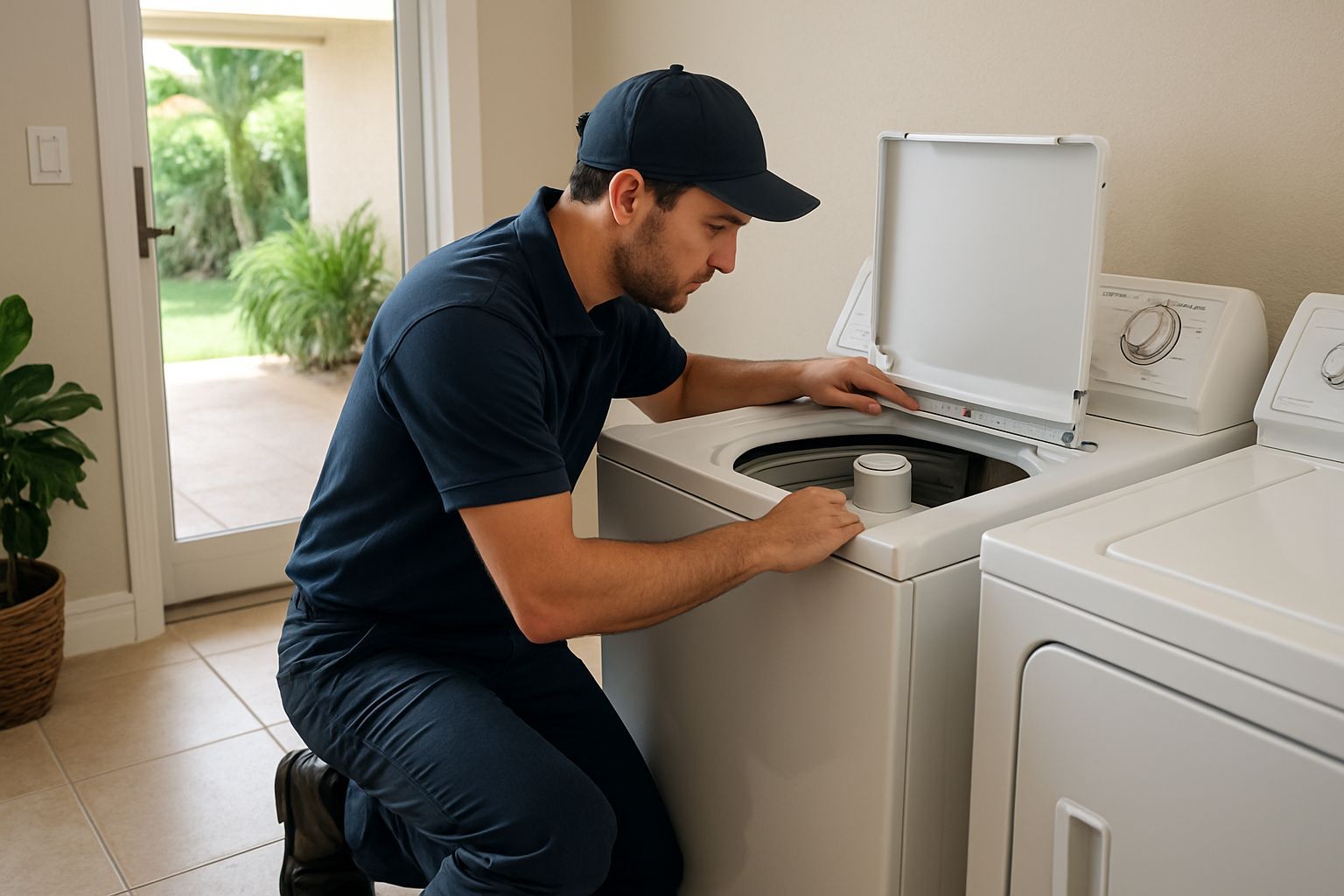
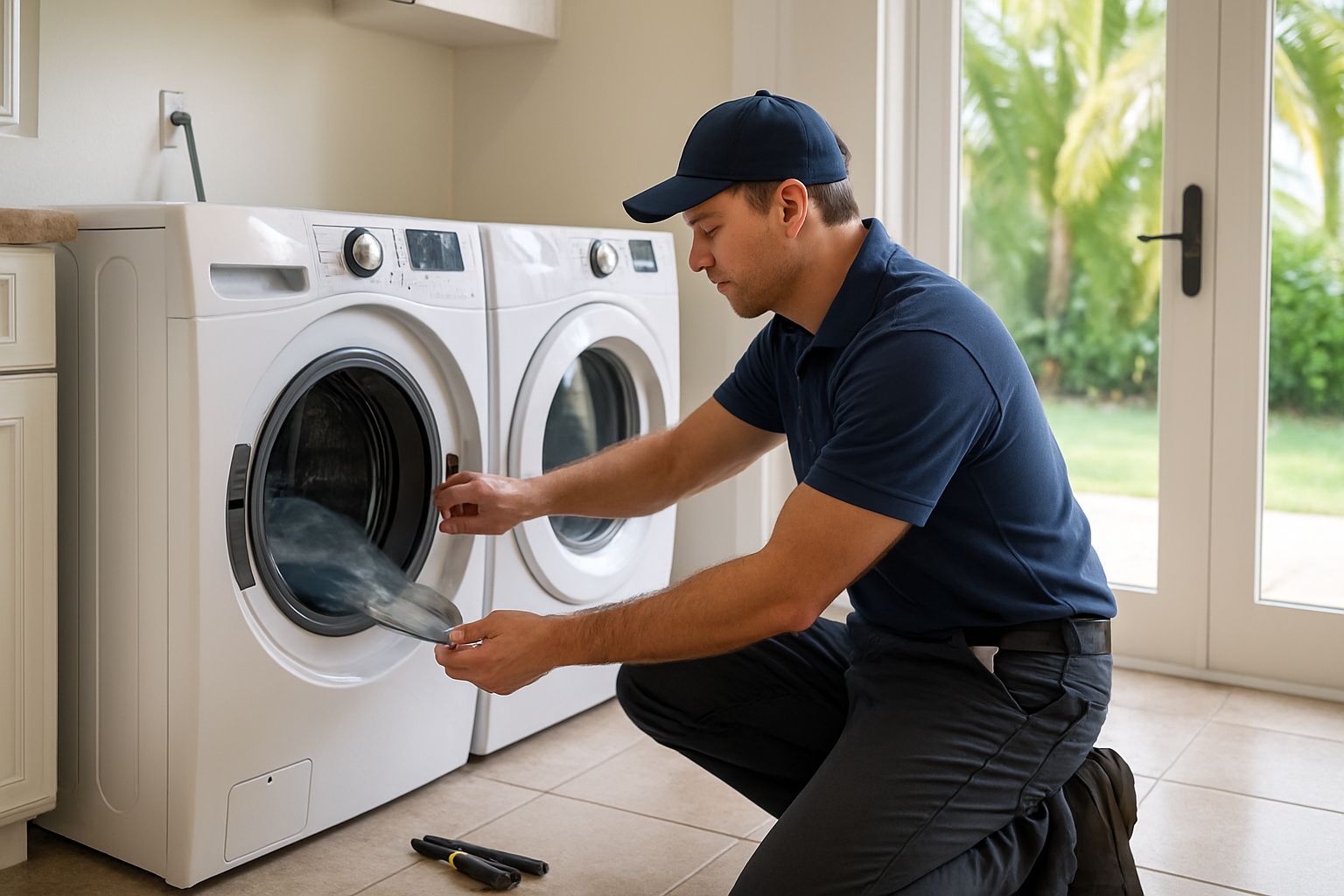
Modern washers use safety switches and locking systems to prevent the basket from spinning at high speed while the lid or door is open. A top-load washer may use a lid lock and strike, while a front-load model usually has an electronic door-lock assembly.
If the control cannot confirm that the door is locked, it may fill normally but refuse to spin. Repeated clicking around the lid or door is often useful information. A visibly damaged strike can also prevent the lock from engaging.
Do not bypass the lock as a test. Besides creating a safety hazard, bypassing a safety circuit can make diagnosis more difficult and may damage electronic components on some machines.
An Unbalanced Load Can Cancel the Spin Cycle
Not every no-spin complaint is caused by a failed component. A heavy blanket, bath mat, comforter, or a small load containing one heavy item can collect on one side of the basket. The washer senses excessive movement and may repeatedly attempt to redistribute the load before slowing down or canceling the high-speed spin.
If the problem only happens with bulky loads, redistribute the clothes and try a spin cycle again. A washer that spins normally when empty or with an evenly balanced load may not have a mechanical failure at all.
Drive-System Failures Depend on the Washer Design
Once we know the washer can lock and drain, we start looking at the components responsible for turning the basket. This is where model-specific diagnosis becomes important.
Depending on the washer, the drive system may use a belt, motor coupler, clutch, shift actuator, transmission, rotor, stator, direct-drive motor, or electronic motor-control system. A worn belt may allow the motor to run without properly turning the basket. A failed shift actuator can prevent certain top-load washers from changing from agitation into spin. A damaged coupler or clutch can create another version of the same complaint.
This is why replacing a motor simply because the washer does not spin is usually a poor diagnostic strategy.
Water-Level Sensors Can Prevent Spin
The control also needs to know that the water level has dropped. Many modern washers use a pressure sensor that monitors the amount of water in the tub. If that sensor or its pressure hose gives the control incorrect information, the machine may behave as if it is still full of water.
A blocked pressure hose, inaccurate sensor, loose connection, or wiring problem can therefore stop the washer from entering the expected spin sequence even when the drain pump has removed most of the water.
A technician may verify the pressure system through diagnostic mode, electrical testing, or manufacturer specifications rather than automatically replacing the sensor.
The Basket May Try to Spin and Then Stop
Pay attention to what happens just before the failure. If the basket moves a few inches, stops, reverses, or repeatedly tries to accelerate, the control may be detecting a problem with motor movement or basket speed.
Some washers monitor motor speed electronically. If the control commands movement but does not receive the expected feedback, it may stop the motor and store an error code. Depending on the design, the problem could be a speed sensor, wiring harness, motor-control component, or mechanical resistance in the basket.
Do Not Automatically Replace the Main Control Board
Electronic control boards are often blamed because they manage most washer functions. But a control board can be working correctly while refusing to spin because it is receiving information that tells it conditions are not safe or correct.
Before condemning a board, we want to know whether the machine is locking, draining, sensing the correct water level, commanding the drive system, and receiving motor-speed feedback. Diagnosis becomes much more accurate when those steps are checked in sequence.
What You Can Safely Check Before Service
Start with the simple things. Make sure the washer is not overloaded. Redistribute an uneven load. Check whether water remains inside after the cycle. Inspect the drain hose for an obvious kink. Look at the lid or door strike for visible damage, and note any error code shown on the display.
If your washer will not spin after those basic checks, the next step should be diagnosis rather than guessing at parts. A technician can determine whether the problem originates in the lock system, drainage system, pressure sensing, drive components, wiring, motor controls, or main electronic control.
Why Proper Diagnosis Matters
A washer that fills but does not spin can have a relatively simple problem or a more involved electrical or mechanical failure. The symptom by itself does not tell us which part is bad. Following the cycle step by step is what separates a real diagnosis from parts swapping.
If the washer repeatedly leaves clothes soaking wet, stops with water in the tub, makes unusual grinding or humming noises, or cannot complete the final spin, continuing to run it may put additional stress on the pump or drive system. At that point, professional testing is the safest way to identify the actual cause.