
Why Is My Refrigerator Warm but the Freezer Is Cold? | Refrigerator Repair
Freezer cold but refrigerator warm? Learn what an appliance technician checks, including evaporator fans, defrost problems, dampers, and airflow issuesRefrigerator warm but freezer still cold? Learn what an appliance technician checks for airflow, evaporator fan, frost, damper and defrost problems before replacing parts.
If your freezer is still making ice and keeping food frozen but the refrigerator section feels warm, don't assume the refrigerator has lost its refrigerant or needs a compressor. This is one of those calls where what the appliance is still doing correctly tells us almost as much as what isn't working. In many refrigerators, the freezer is where the cooling actually takes place, and a fan and air passages move some of that cold air into the fresh-food compartment.
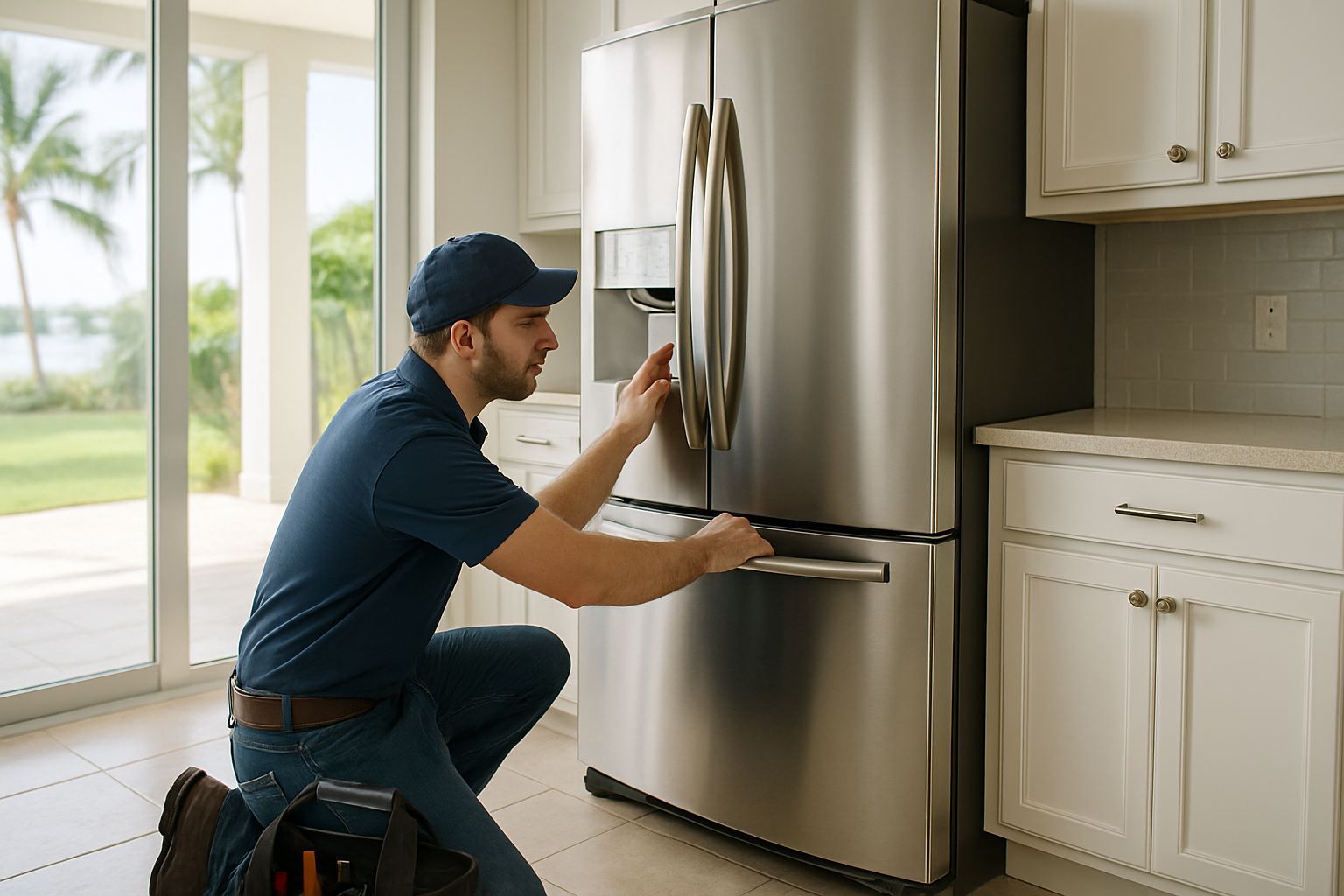
When we arrive on a refrigerator-warm/freezer-cold service call, we don't start changing parts. We look at temperatures, airflow, fan operation and the frost pattern and then use the model's service information to determine why the cold air isn't getting where it belongs. If you're dealing with this problem locally, our Boynton Beach appliance repair service can diagnose the refrigerator in your home.
The First Thing We Check Is Airflow
A freezer at or near normal temperature tells us the refrigerator is producing cooling. The next question is whether that cooling is reaching the refrigerator compartment. On many single-evaporator designs, an evaporator fan moves air across the cold evaporator and through ducts into the fresh-food section.
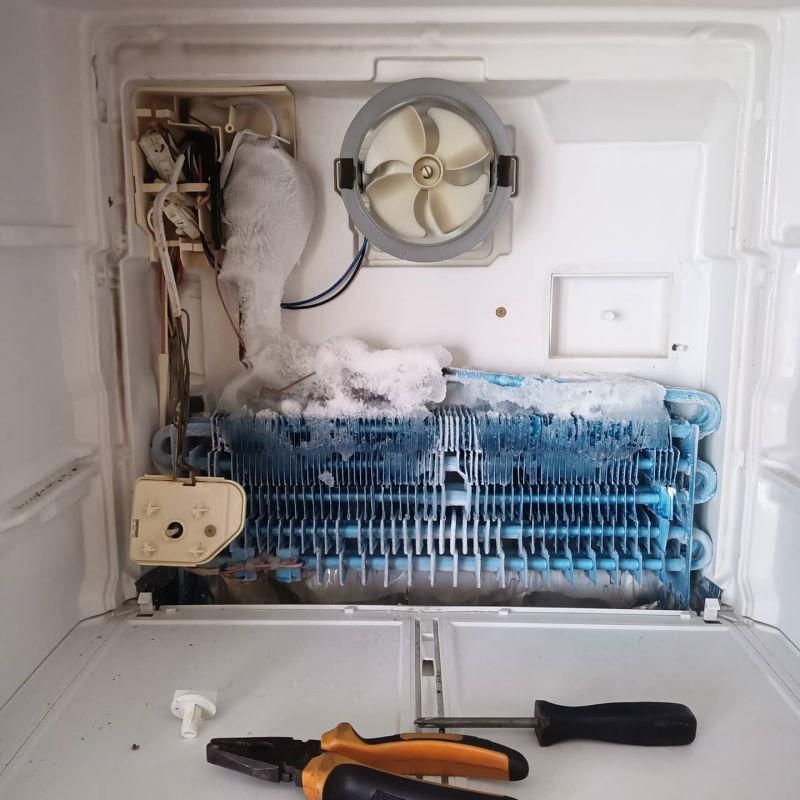
This is why a refrigerator can have frozen ice cream downstairs or in the freezer compartment while the milk in the refrigerator is getting warm. The problem may be an evaporator fan that isn't running, a blocked air passage, a damper that isn't opening or frost covering the evaporator and restricting airflow.
This diagnostic approach is also discussed by experienced appliance technicians on Appliantology: when the freezer is cold and the fresh-food compartment is warm, airflow, evaporator fan operation, frost buildup and damper operation are important places to investigate.
A Frosted Evaporator Tells Us a Lot
One of the most useful checks we make is inspecting the evaporator frost pattern. A heavy blanket of snow and ice across the evaporator can restrict airflow dramatically. The refrigerator may continue running, but the fan can no longer move enough air through the frozen coil.
That can point us toward a defrost-system problem rather than a compressor problem. Depending on the refrigerator design, diagnosis may involve checking the defrost heater, sensor or thermostat, wiring and electronic control. The correct test depends on the model, which is why guessing and replacing parts from an online symptom list can get expensive quickly.
For refrigerators that aren't maintaining temperature, our refrigerator repair page explains the types of cooling problems we service.
The Evaporator Fan Can Fool Homeowners
We see another situation where the freezer looks reasonably cold but the evaporator fan has stopped or is operating intermittently. Without that fan, cold air doesn't circulate correctly.
Sometimes the fan itself has failed. Other times the fan isn't receiving the voltage or control signal it needs. That's an important distinction. Installing a fan motor won't repair a wiring or control problem.
Professional troubleshooting means proving the failure. We use the refrigerator's wiring information and electrical measurements to determine whether the component is actually bad instead of treating the appliance like a parts-changing experiment.
Don't Forget the Damper and Return Air Path
The damper is another component we check on applicable models. Think of it as a controlled doorway between the cold-air supply and the refrigerator compartment. If that doorway stays closed, the freezer can remain cold while refrigerator temperatures climb.
Return airflow matters too. Cold air entering the refrigerator has to circulate and return properly. Blocked vents, ice buildup or food packed tightly against air passages can interfere with that circulation.
Before scheduling service, homeowners can safely check that food isn't blocking visible vents and confirm that the doors are closing completely. Avoid removing electrical panels or attempting live-voltage tests unless you're properly trained.
When It's Time for Refrigerator Service
If refrigerator temperatures keep rising, don't wait several days hoping the problem will correct itself. Food safety becomes an issue, and a refrigerator running continuously while struggling to cool can turn one problem into a more expensive service call.
General Appliance Service provides fridge service repair near me for cooling complaints including warm refrigerators, excessive frost, unusual noises and temperature problems. When scheduling, have the complete model number available whenever possible. That helps us identify the refrigerator design and prepare for the diagnostic visit.
If you need service quickly, check our same day fridge repair options, or use our schedule appliance service page to request an appointment.
Diagnose First, Replace Parts Second
The biggest lesson from a refrigerator that's warm while the freezer remains cold is simple: symptoms are clues, not a diagnosis. An evaporator fan, defrost failure, damper, blocked airflow, sensor, wiring problem or control issue can produce similar customer complaints.
That's why our approach is to test the appliance and follow the evidence. Finding the actual failure before ordering parts usually saves time, prevents unnecessary repairs and gives the homeowner a much better answer about whether the refrigerator is worth fixing.
Need refrigerator or appliance repair in Boynton Beach? General Appliance Service provides in-home appliance diagnosis and repair throughout Boynton Beach and surrounding communities. Call (386) 359-3215 to request service.